AI Product Architecture
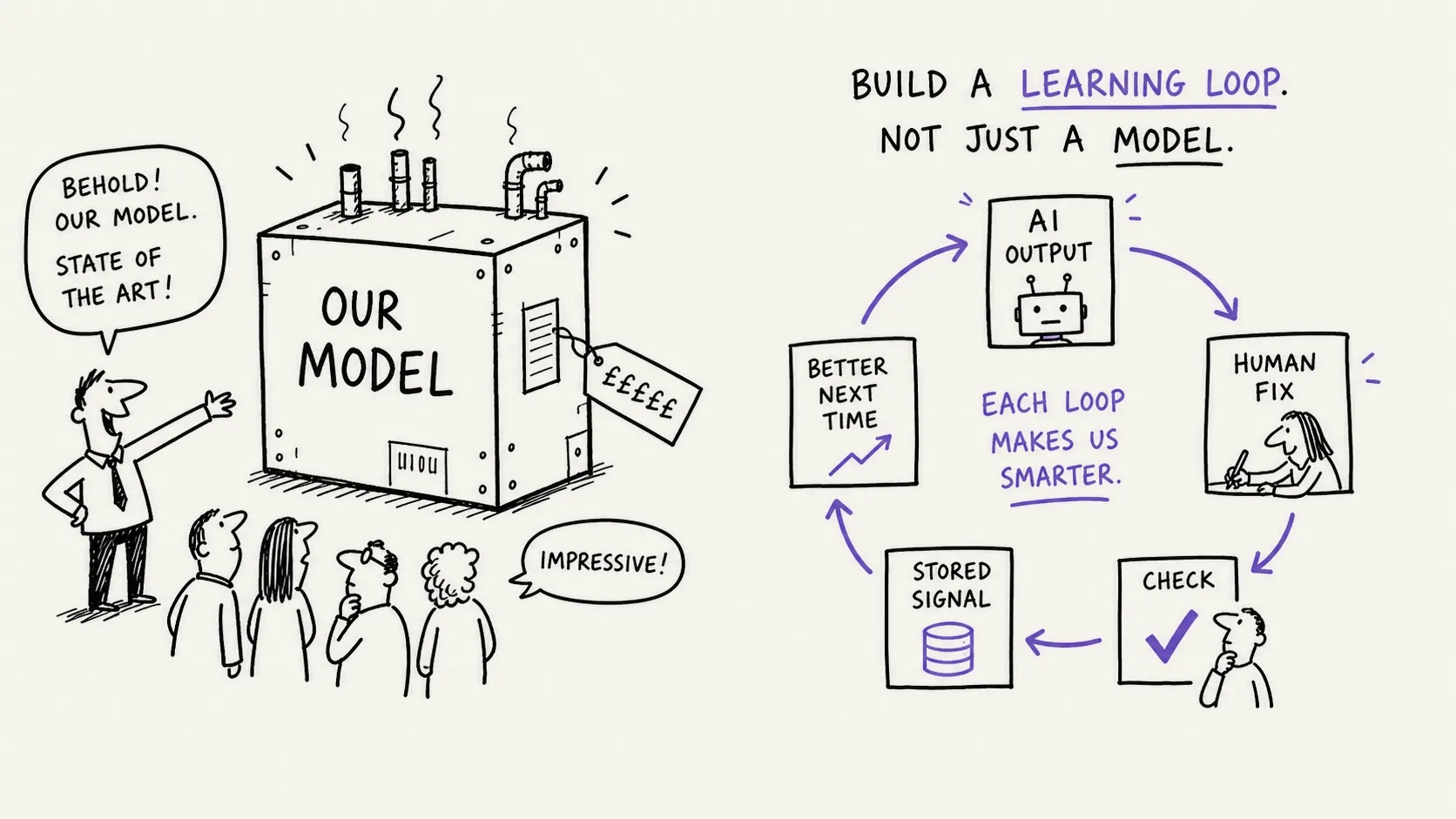
Don't Build A Model. Build A Learning Loop.
The question is not 'should we train our own model?' The better question is: what will our product learn that nobody else can see?
Writing
Long-form thinking on AI product development, leadership, and the craft of building things that matter.
The question is not 'should we train our own model?' The better question is: what will our product learn that nobody else can see?
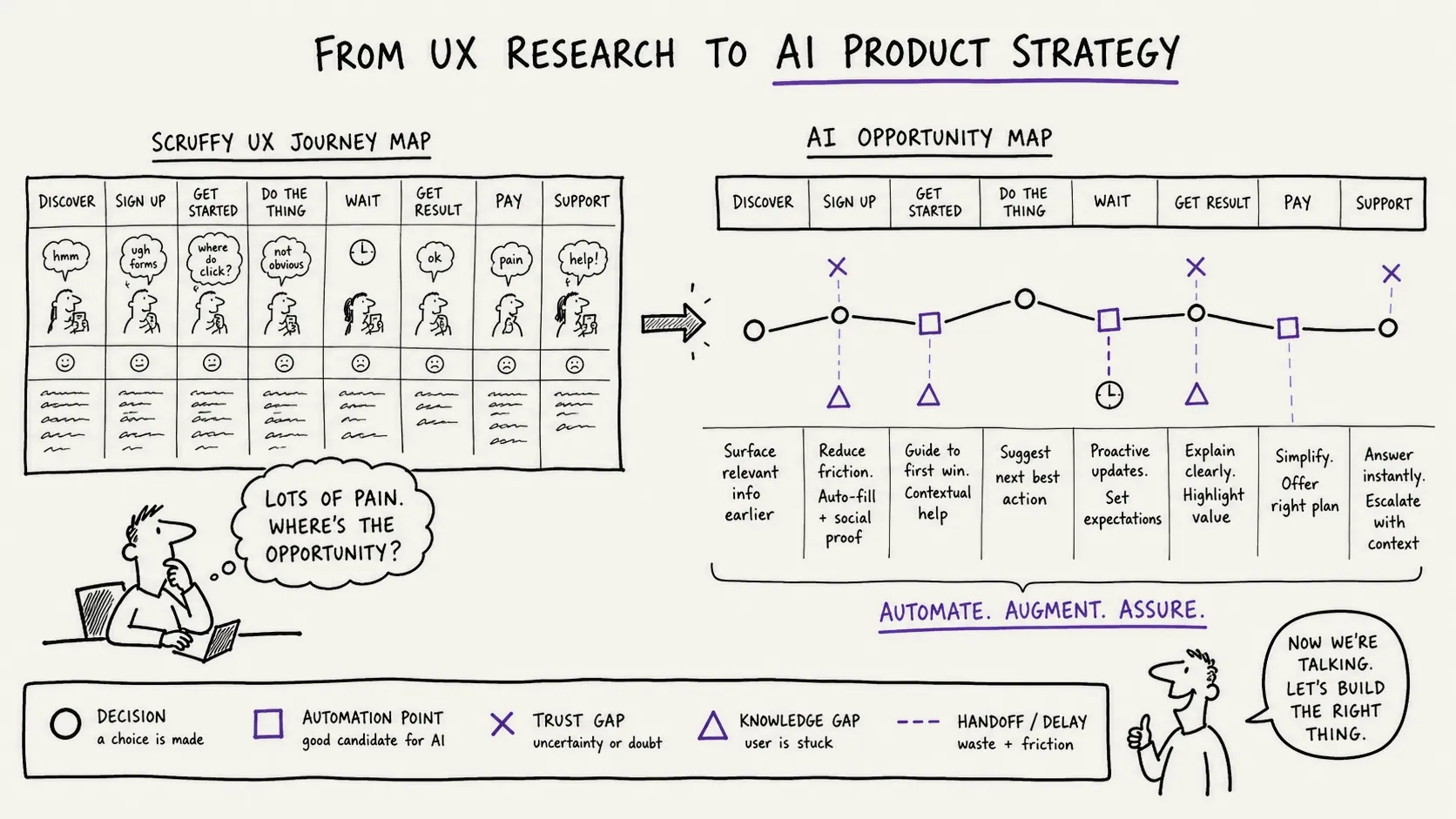
The best AI strategy session may start less like a hackathon and more like a good piece of UX research: who is doing the work, what are they trying to decide, and where does the system currently fail them?
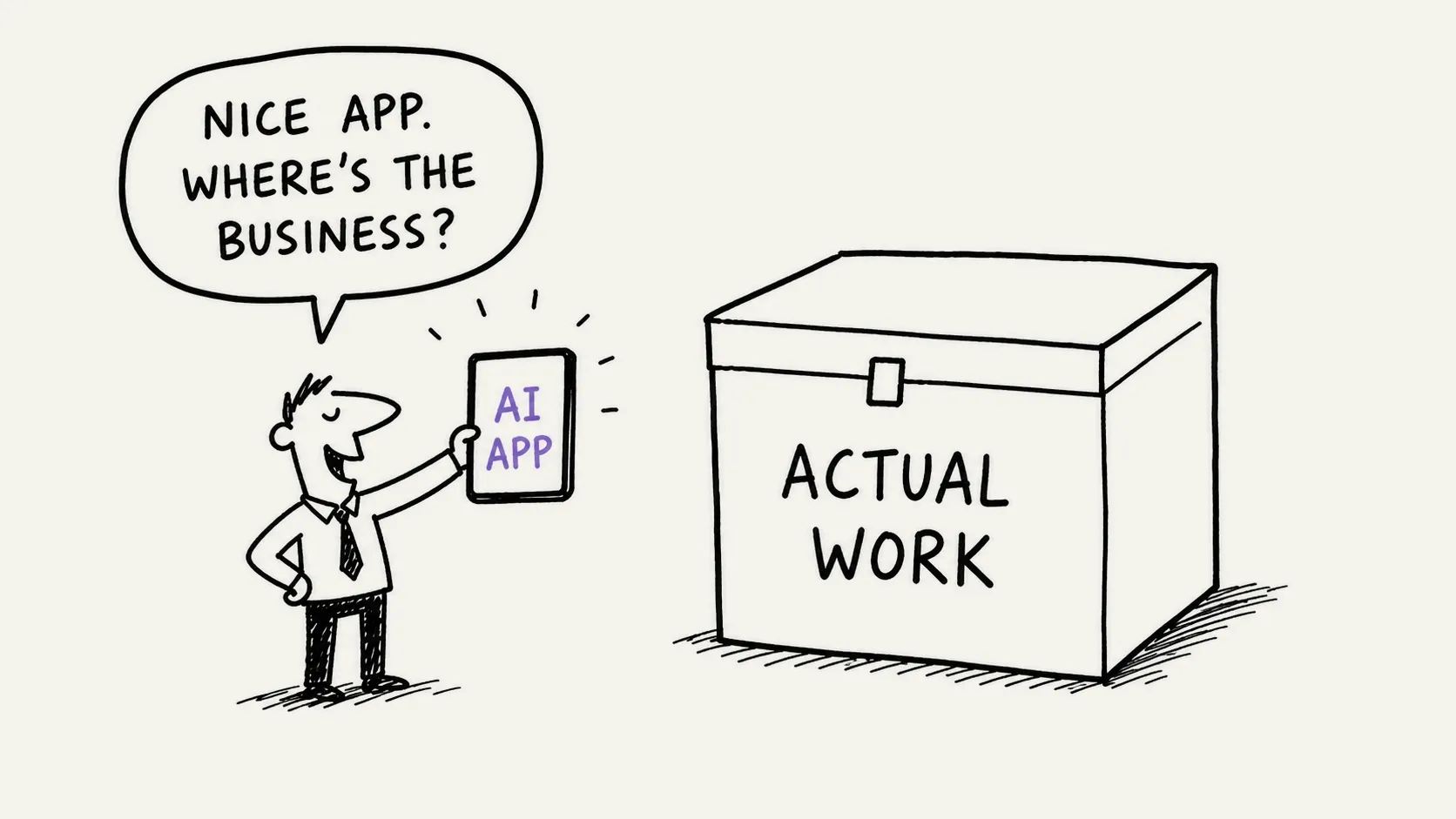
I threw myself into building AI apps and came out with an uncomfortable conclusion: the app was often the least interesting part.
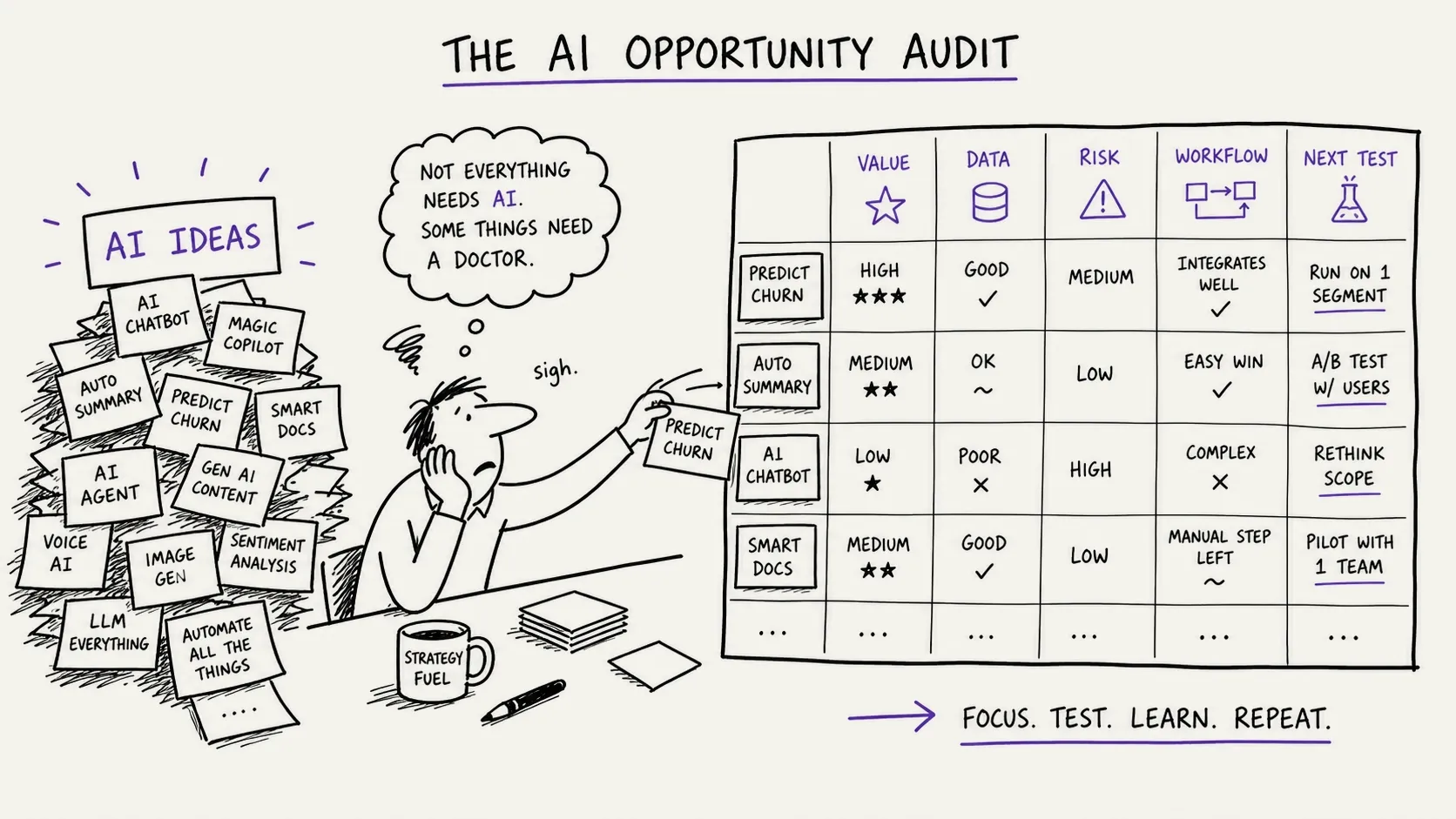
'Where should we use AI?' is too broad a question. It usually produces a brainstorm, a backlog, and a few ideas that sound impressive until someone asks who owns the data.
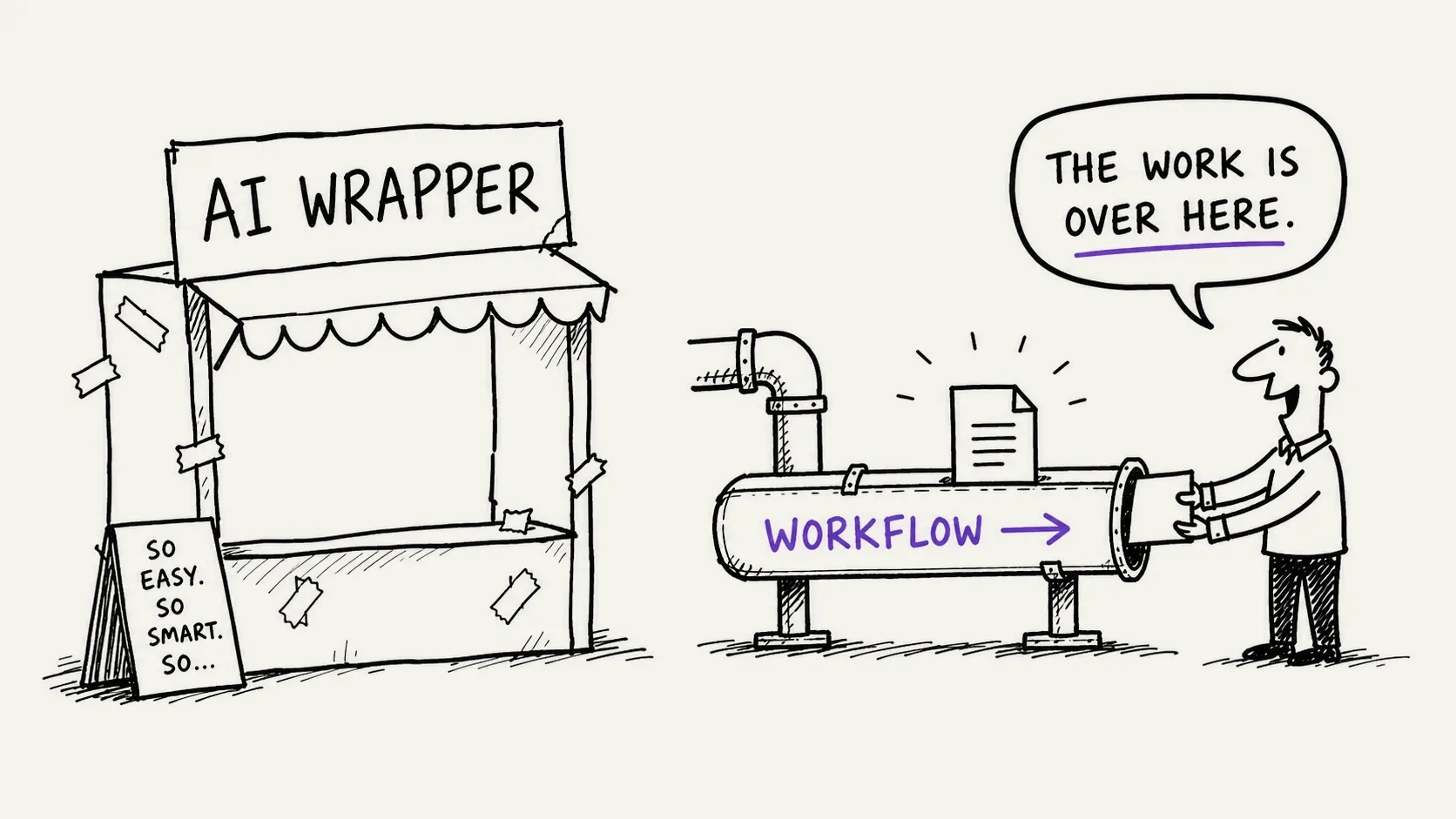
The easiest AI product to build is often the easiest one to copy. Here's what separates a fragile wrapper from a durable workflow AI product.
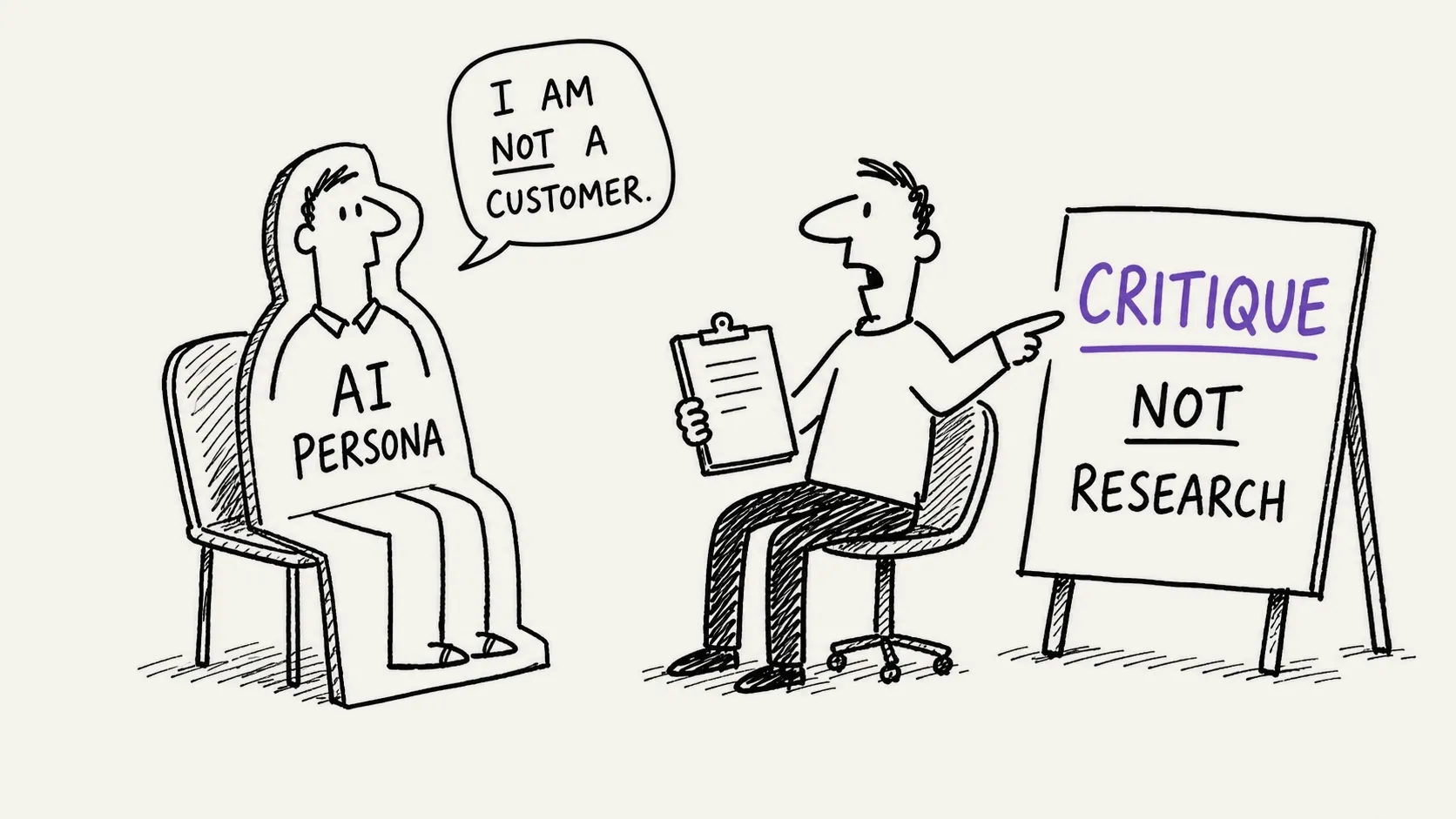
AI personas are not your customers. That is precisely why they can be useful — as long as you stop pretending they are research and start using them as structured provocation.
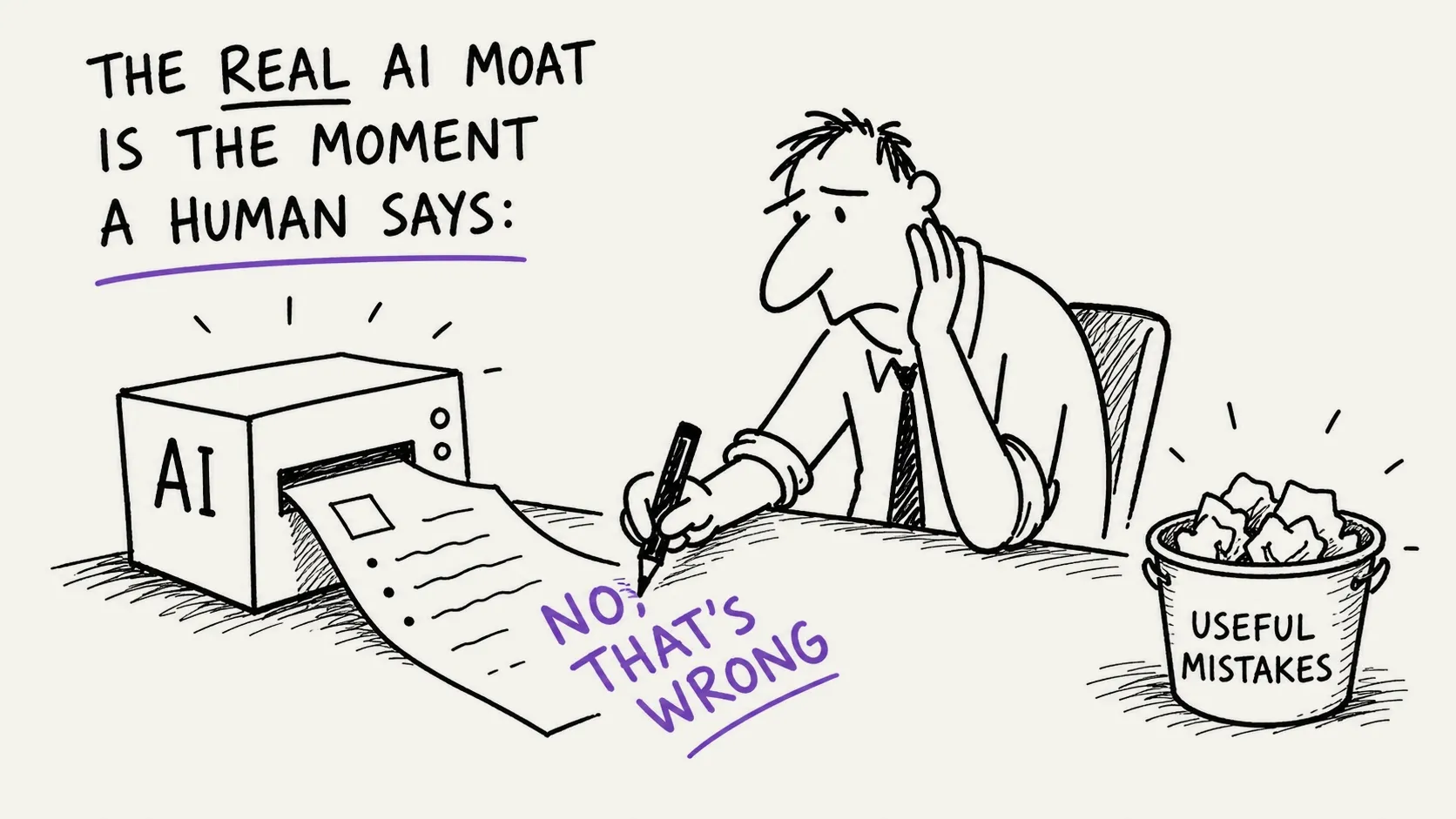
The most valuable sentence in an AI product might be: 'No, that's wrong.' Most products treat correction as friction. Better products treat it as intelligence.
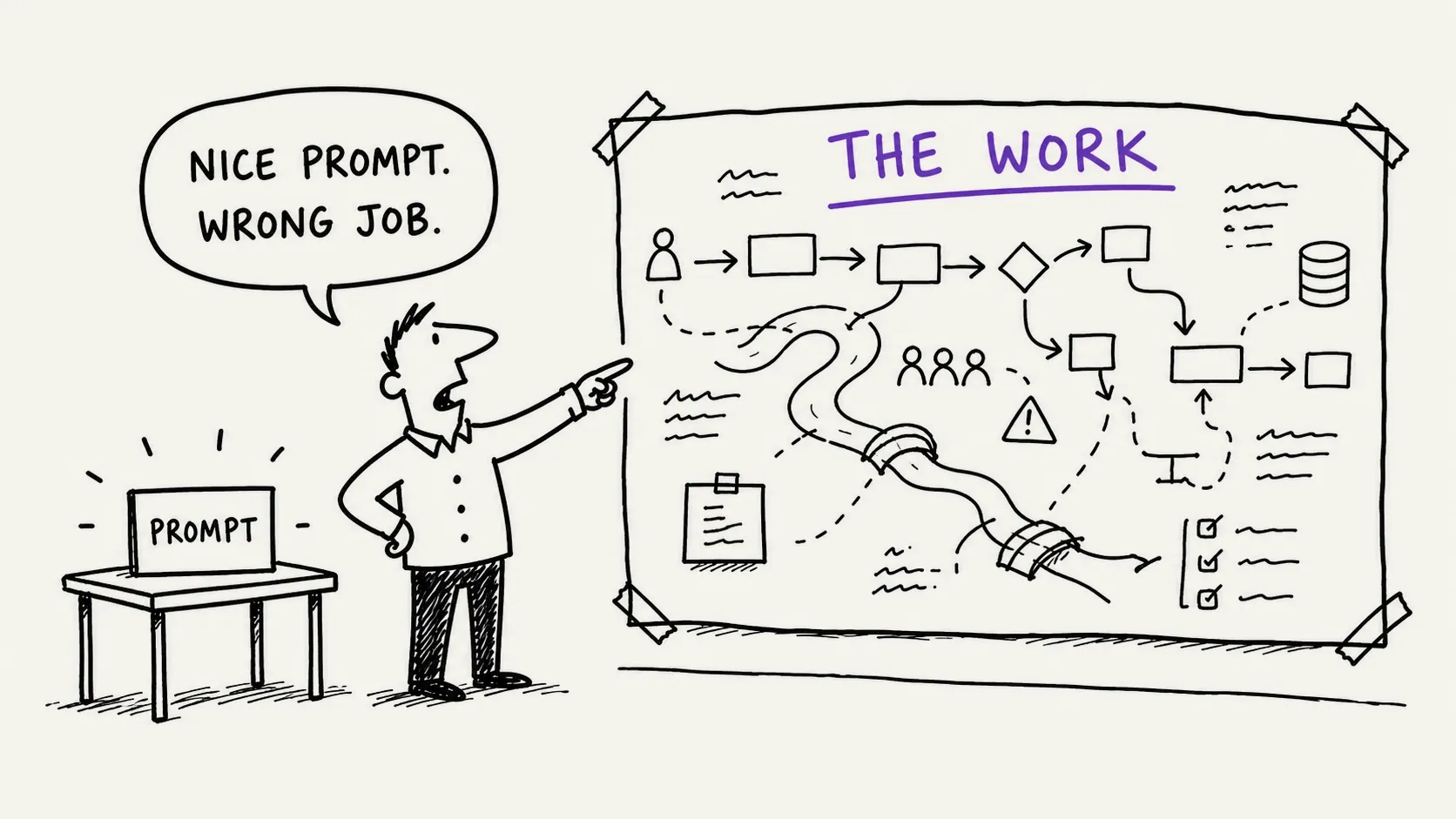
The most important AI skill may not be writing better prompts. It may be understanding the work well enough to know what should be automated in the first place.
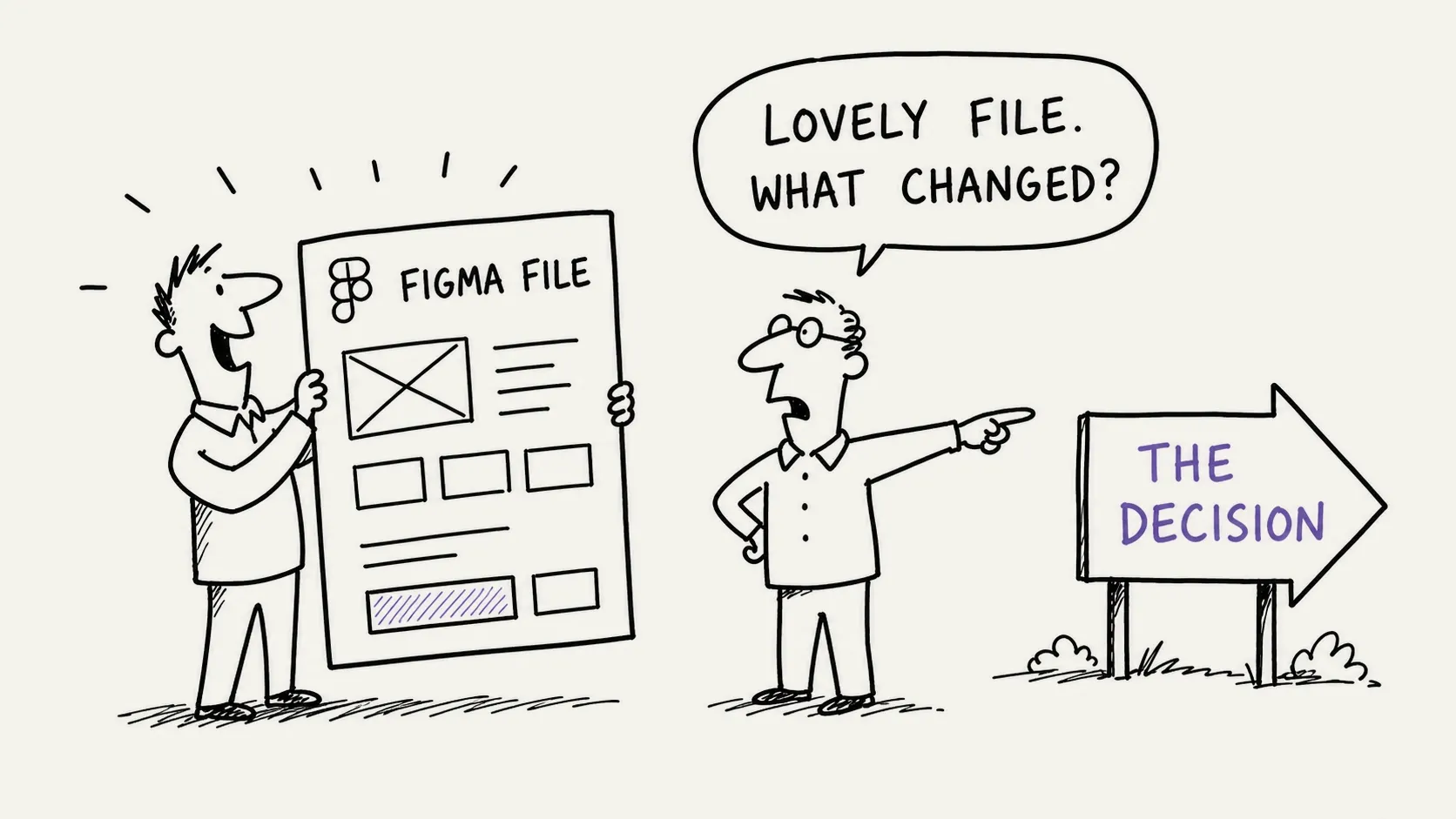
Your customer does not buy your Figma files. Your board does not buy your component library. They buy confidence that the product will solve a problem, create value, and survive contact with reality.
Before a team spends time reacting to a market signal, it should test the question from more than one angle. AI-assisted persona panels can challenge assumptions before the work hardens into a plan.