Key takeaways in 3 minutes
I spent time building AI apps and hit an uncomfortable pattern: the interface was often the least defensible part.
The AI app is not the enemy. It is a useful artefact. But it is not automatically a strategy.
I threw myself into building AI apps and came out with an uncomfortable conclusion: the app was often the least interesting part.
The app was often the least interesting part.
That is not to say the apps were useless. Quite the opposite. Building them was one of the fastest ways to understand what AI could do, where the user experience broke, and how quickly a rough idea could become something you could click, test and improve. Prototyping is still a brilliant way to learn.
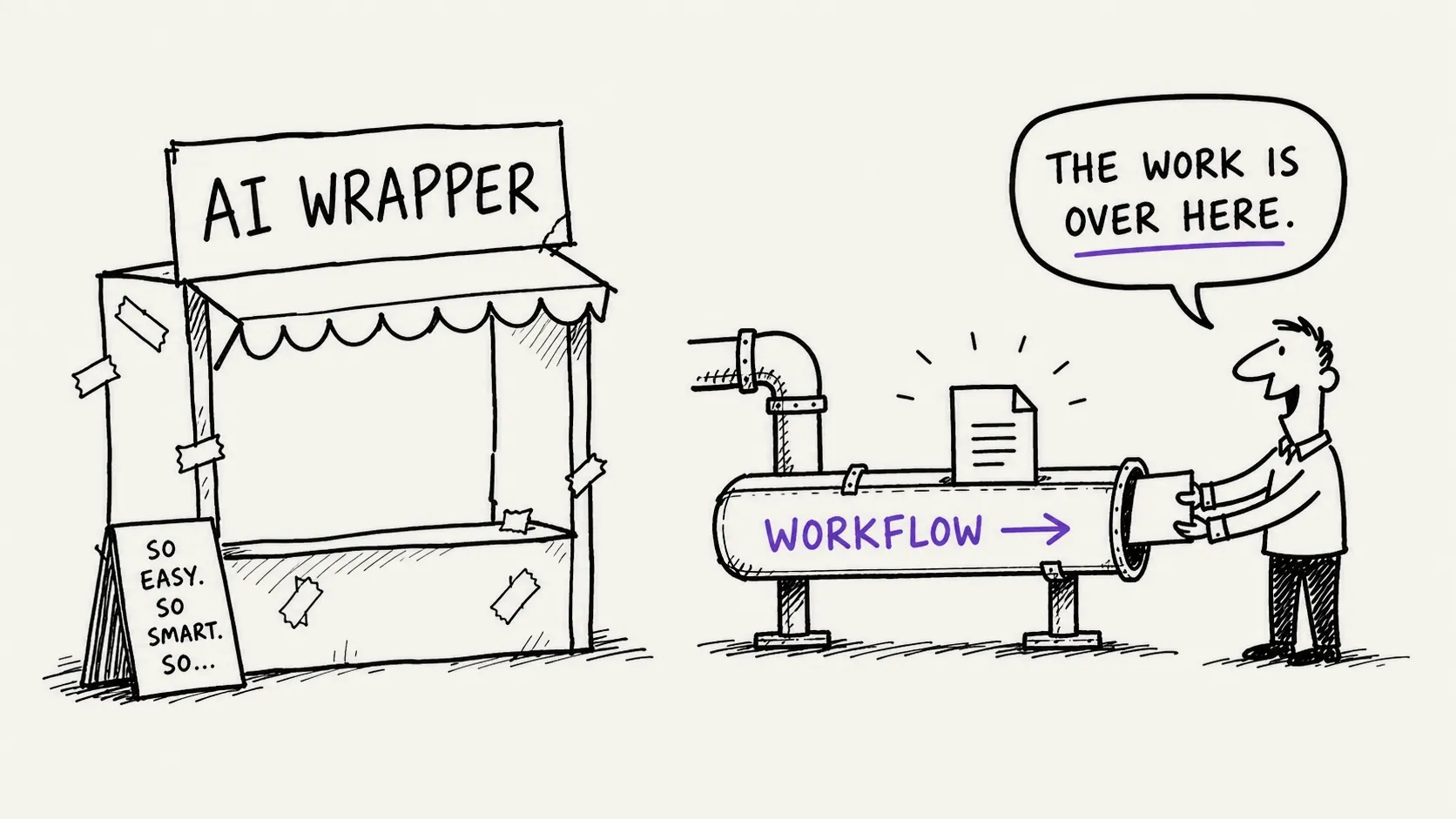
But after a while, a pattern became hard to ignore. A lot of AI apps are just a neat interface sitting on top of someone else's core capability. They may be useful. They may be well designed. They may even be commercially viable for a while. But many are not especially defensible.
There is nothing quite like proudly finishing an AI app and then realising the moat is about as deep as a meeting invite called "quick sync".
The Trap
The AI app trap is simple. Because AI makes interfaces and prototypes faster to create, it becomes tempting to treat the app itself as the strategy.
Add a prompt box. Add a file upload. Add a few suggested actions. Add streaming text. Add a smart-looking result panel. Suddenly it feels like a product.
Sometimes it is. More often, it is a question wearing a nice jacket.
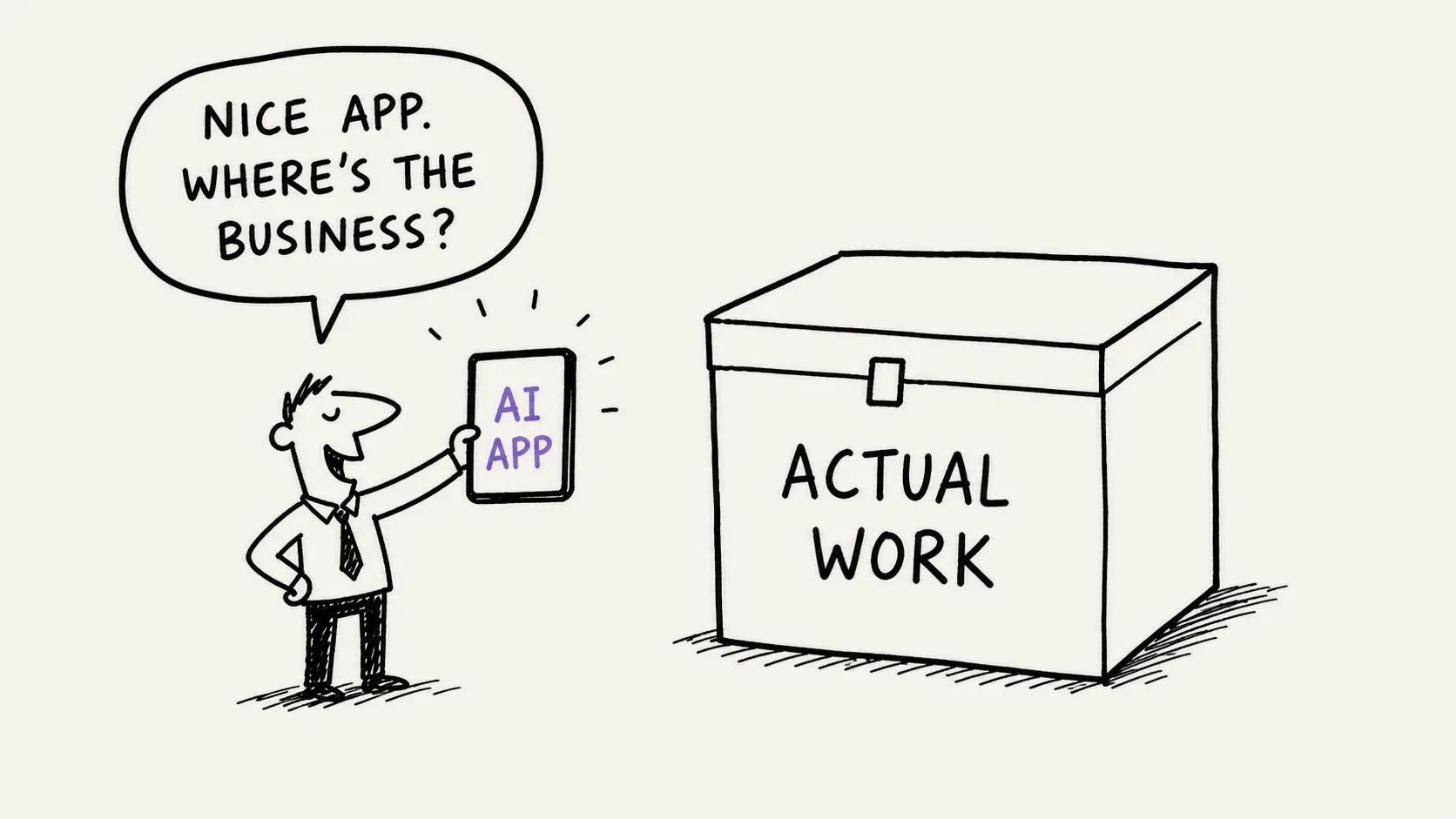
The real question is not "Can we build an AI app?" Increasingly, the answer is yes. The more important question is: what would remain valuable if the interface were copied tomorrow?
That is a harder question, and a much better one.
Why UI Alone Is Getting Fragile
Good interface design still matters. It always will. A confusing AI product can destroy trust faster than a bad loading spinner can destroy patience. Users need clarity, control, feedback, recovery and confidence.
But UI alone is less defensible than it used to be.
Model capability is becoming widely available. Product teams can generate screens faster. Competitors can copy interaction patterns quickly. Platform companies can absorb whole categories of thin AI features with one release note and a cheerful demo video.
If the main value of a product is "we put a nicer interface on the model", the product may be vulnerable.
That does not mean wrappers are automatically bad. Some are useful. Some create genuine value through focus, distribution, brand, compliance, service or speed. But if the whole business disappears when a model provider adds a dropdown, it was probably not a business. It was a waiting room.
The real question is not 'Can we build an AI app?' It is what remains valuable if the interface is copied tomorrow.
Where Value Actually Sits
The stronger AI opportunities usually sit behind the screen.
They sit in workflow understanding: knowing what happens before and after the AI interaction. They sit in business context: understanding why this decision matters, who owns it, and what goes wrong if it fails. They sit in data: not just having information, but knowing which information is trusted, current and useful.
They sit in integration. Does the output land in the CRM, finance system, procurement platform, ticketing tool or document repository where work actually happens? Or does someone copy and paste it into another tab while quietly resenting everyone involved?
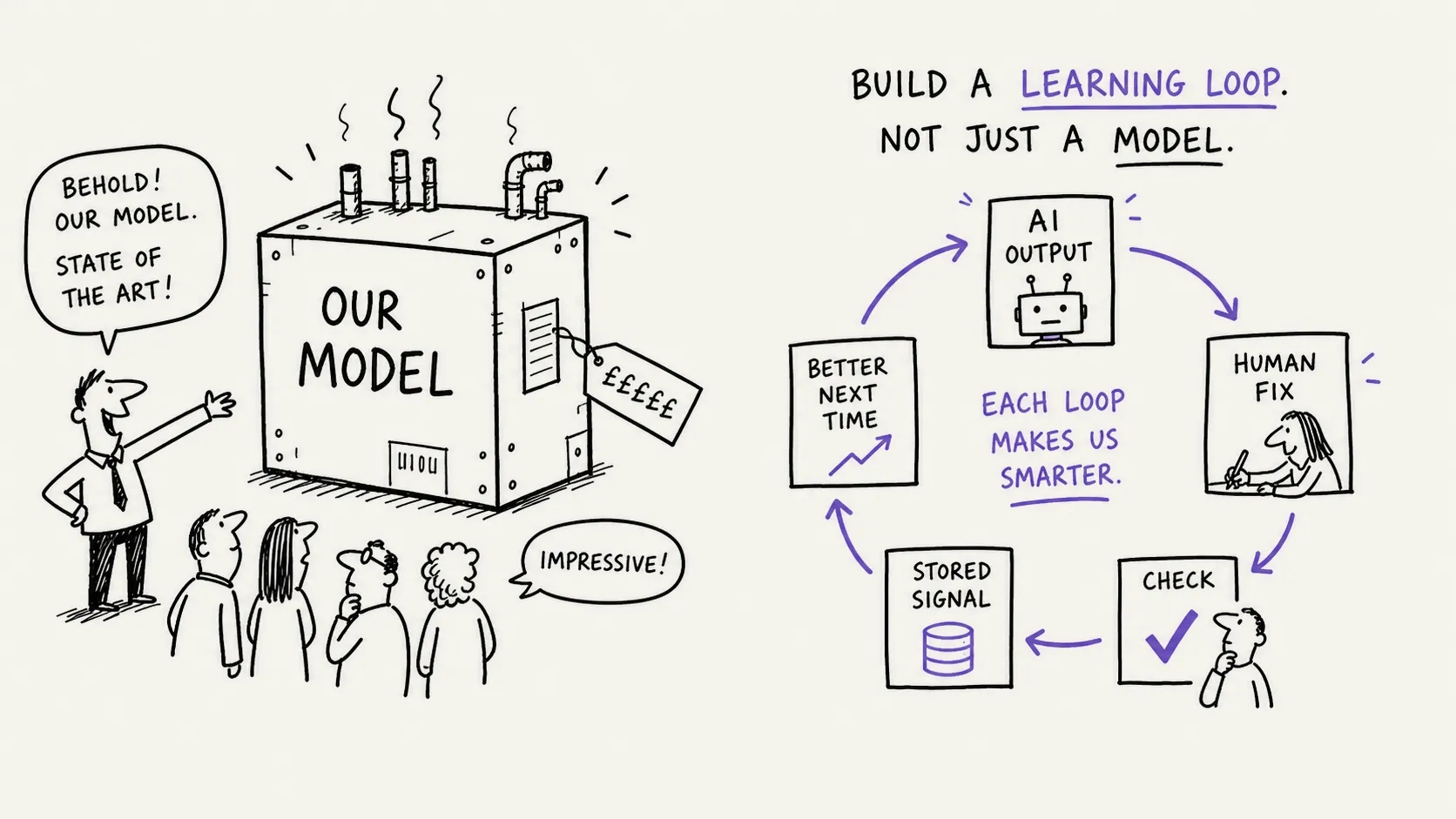
They sit in trust and evaluation. Can the system show sources, flag uncertainty, validate against rules, capture human correction and improve over time?
They sit in adoption. Does the product fit the way people already work, or does it demand that a busy team invent a new habit because the demo looked clever?
This is where the role of design expands. The job is not just to make the AI visible. It is to make the intelligence usable, accountable and valuable inside a real operating environment.
Prototyping Is Still Useful
This is the part that can get lost. Building AI apps is not a waste of time. It is one of the best ways to expose weak thinking quickly.
A prototype can show whether the workflow makes sense. It can reveal that the prompt is not the product. It can show where the user needs evidence, where the system needs memory, where the output needs approval, and where the experience collapses because nobody knows what "good" means.
Used well, app building becomes a strategic discovery method.
The mistake is treating every working prototype as a business. A prototype should help you ask sharper questions: where does the value sit, what is hard to copy, what would improve with use, and what does the organisation know that the model provider does not?
The AI app is not the enemy. It is a useful artefact. But it is not automatically a strategy.
A Simple Defensibility Teardown
Before treating an AI app as a product strategy, run a teardown.
- What does the UI do?
- What does the model do?
- What user or business context improves the output?
- What could a platform provider copy easily?
- What data, workflow knowledge or integration would be hard to copy?
- What does the system learn from real use?
- What decision does it improve?
- What would make a business keep paying after the novelty fades?
This takes the conversation away from "look what we built" and towards "look what we understand".
That is a much stronger position for anyone trying to build credible AI products, advise businesses or move from interface delivery into AI product architecture.
The Defensibility Teardown
- 01Redraw the AI app idea without the screen
- 02Map: inputs, decisions, roles, rules, approvals, corrections
- 03Identify systems of record and measurable outcomes
- 04Ask: what workflow knowledge exists that a competitor cannot quickly replicate?
- 05If the idea collapses without the screen, rebuild the strategy first