Work

Case Studies

Real AI product prototypes. Each explores a specific problem in enterprise workflows — agentic systems, human-in-the-loop design, and AI that earns the right to act.

SS-1

Project Breakdown: SS-1 Signal Shell

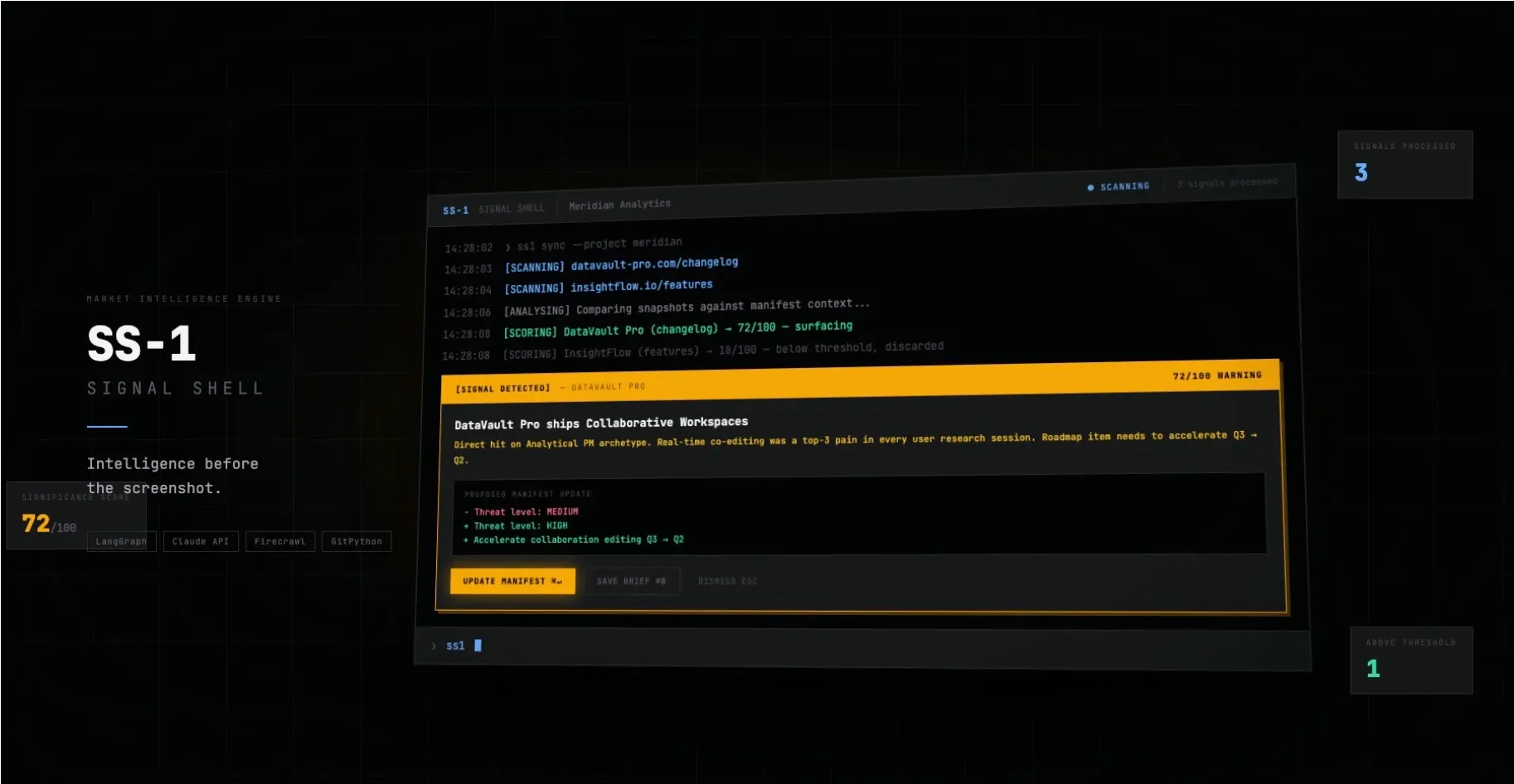
SS-1 Signal Shell is a market intelligence engine for product teams. It monitors competitor changes, filters noise, generates structured strategy briefs and asks a human to approve any update to the product's strategic record. The project explores how AI can support competitive judgement without turning every external signal into a reactive backlog item.
Swarm Lite

Project Breakdown: Swarm Lite

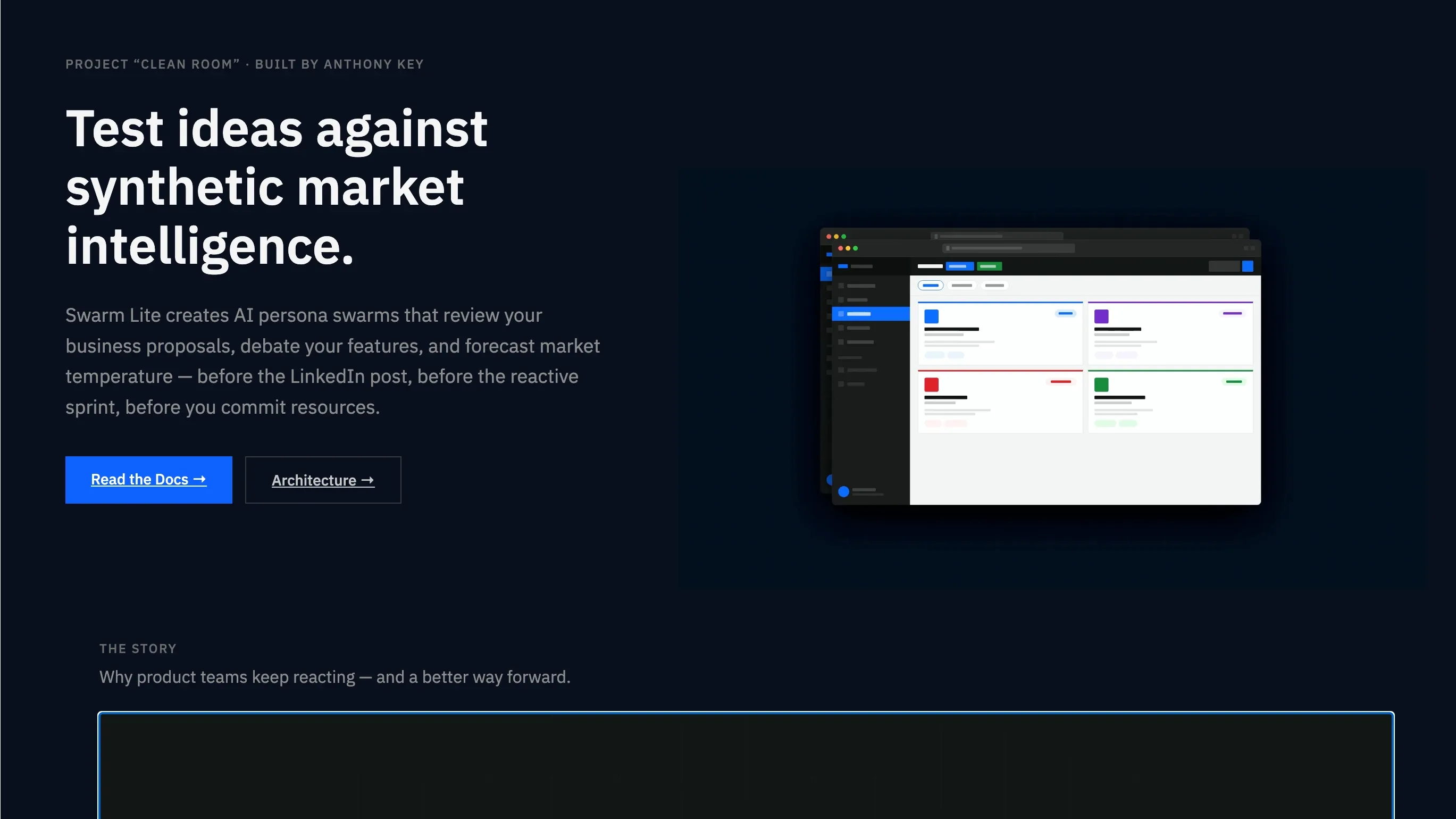
Swarm Lite is an AI product strategy prototype that helps teams test strategic questions before turning them into roadmap work. It generates representative market personas, runs structured huddle sessions, produces decision-ready strategy briefs and routes consequential actions through human approval. The project explores how AI can challenge assumptions earlier without pretending to replace real research.

TX-1

Project Breakdown: TX-1 Terminal Explorer

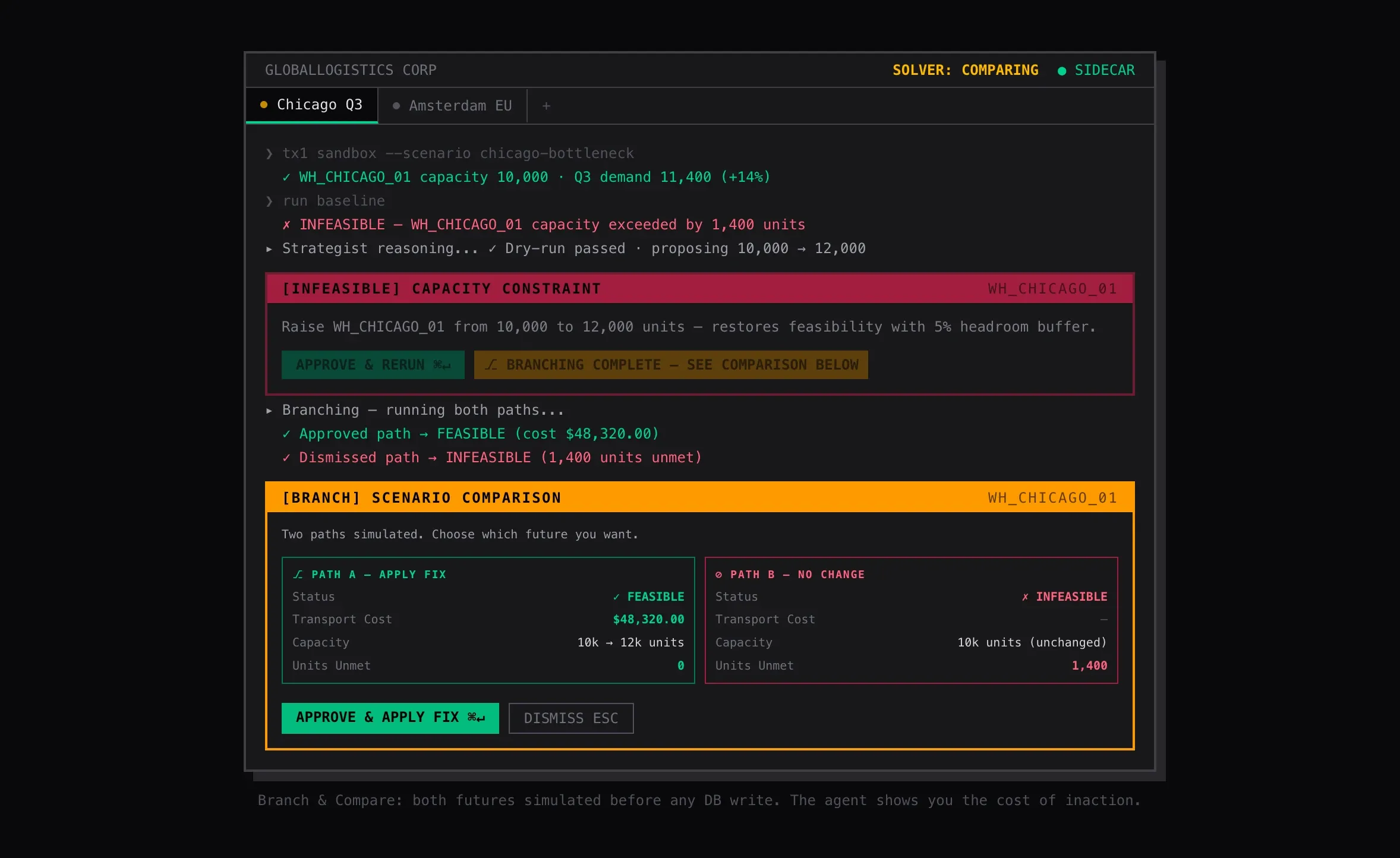
TX-1 Terminal Explorer is a prototype for AI that earns the right to act. It diagnoses supply chain optimisation failures, validates proposed fixes in a dry run, and asks a human to approve the change before anything is committed. The project explores what trustworthy agentic AI should look like in serious enterprise workflows: visible reasoning, bounded autonomy, human ownership and a full audit trail.

AAF-1

AI Agent Accountability Framework

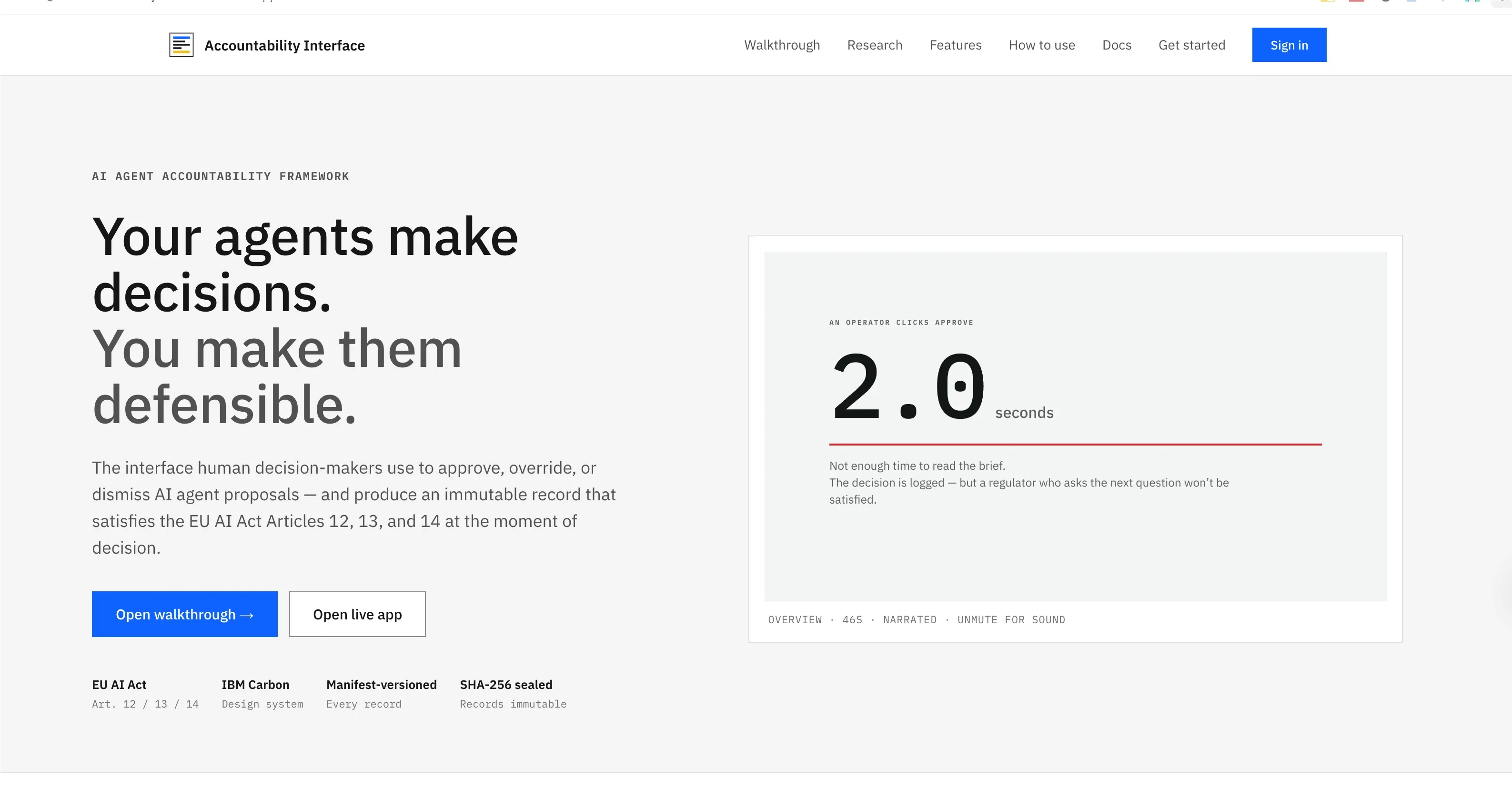
The AI Agent Accountability Framework is a governance layer for agentic AI systems. It combines a human-readable governance manifest, a decision-focused approval interface and a structured decision record model so enterprises can move from nominal human-in-the-loop approval to meaningful, auditable human oversight.

SA-1

Solve Axis

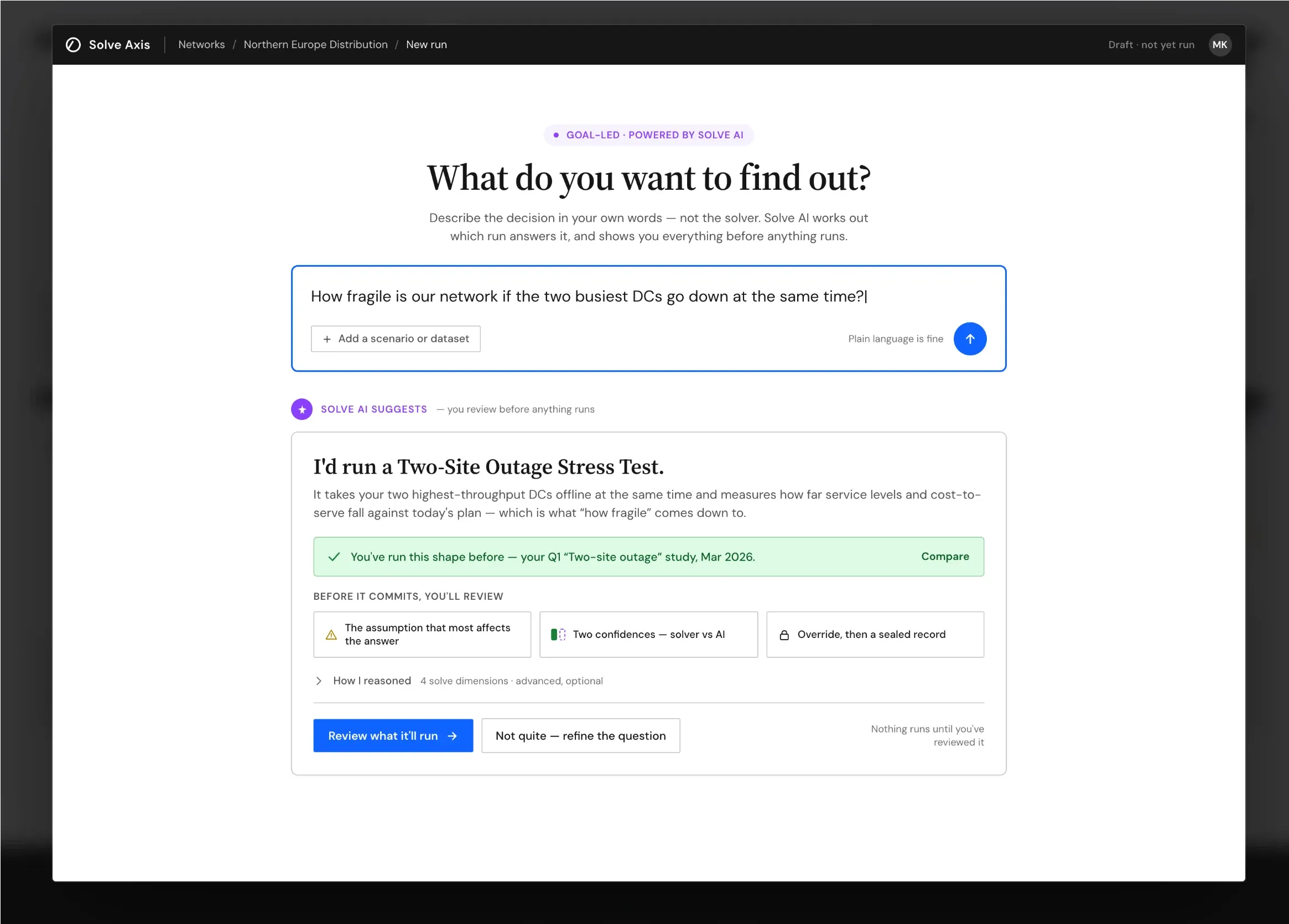
Solve Axis is a concept for an AI-native enterprise supply-chain modelling product, organised around how analysts actually reason about a solve rather than a menu of named run types. Its load-bearing idea is a designed accountability layer — separating what the solver guarantees from what the AI judges, surfacing the one assumption that most affects the answer, and sealing every decision into an auditable record — so AI becomes safe to trust on a seven-figure call.

MAR-1

Margaret

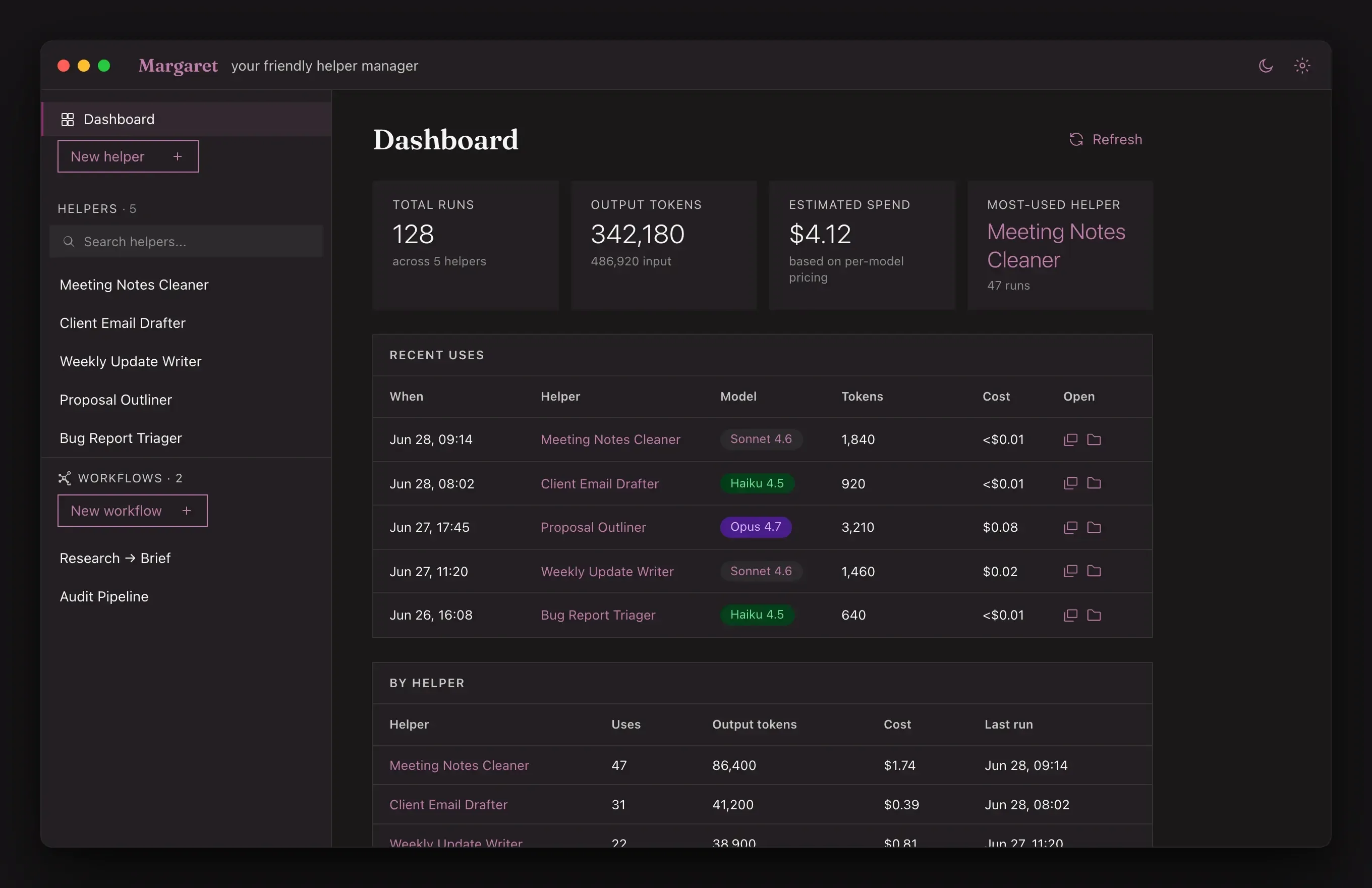
Margaret is a local-first macOS app that turns the tasks you repeat into small, private AI helpers — reusable instructions you write once in plain English and run on your own terms. Helpers and history stay in a folder on your Mac, you bring your own AI key, and you see exactly what's sent before any run. It's built for AI-curious knowledge workers who want reliable, repeatable help without learning an automation platform — a calm middle ground between manual chat and enterprise agent builders.