Key takeaways in 3 minutes
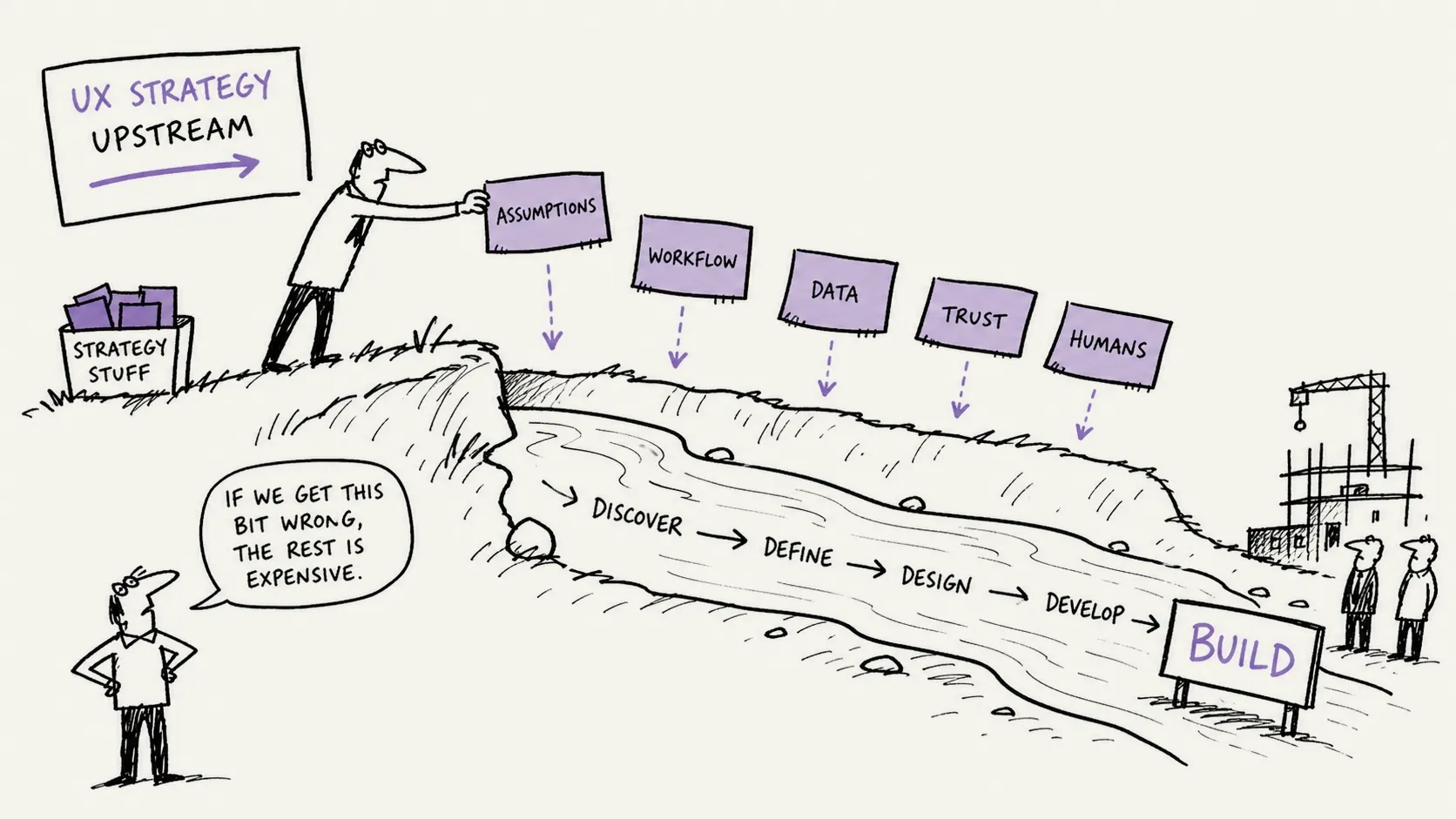
AI product strategy should not start with feature brainstorming. It should start with understanding work.
The point is to turn research into better strategic options.
The best AI strategy session may start less like a hackathon and more like a good piece of UX research: who is doing the work, what are they trying to decide, and where does the system currently fail them?
Good research exposes the work behind the screen.
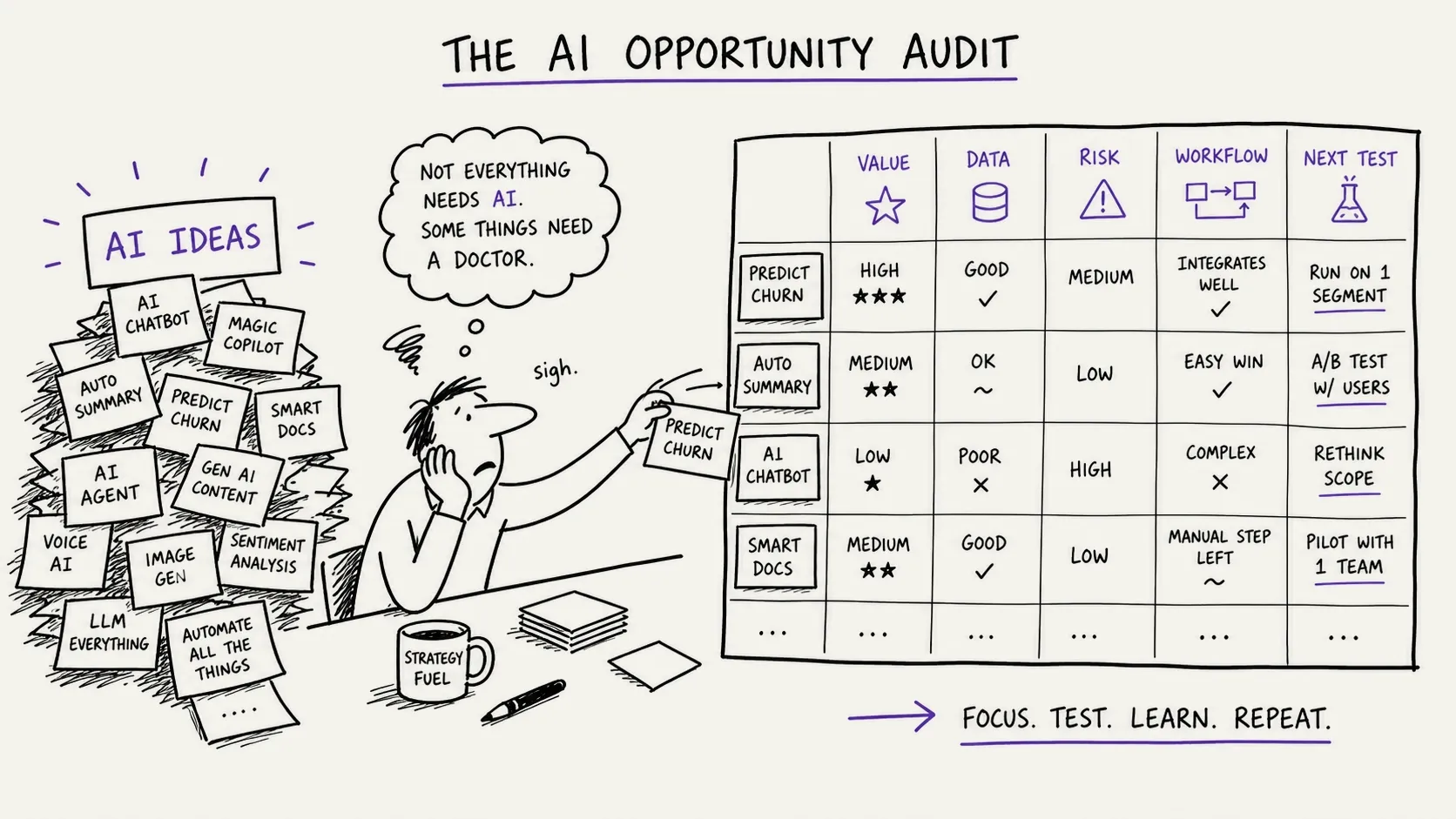
That may sound less exciting than asking everyone to brainstorm AI features on sticky notes, but it is usually more useful. AI opportunity discovery needs evidence, not just ideas. Otherwise teams risk building impressive tools for poorly understood problems, which is a quick way to spend money while looking busy.
UX research has always been good at finding the real problem. AI just made the cost of solving the wrong problem much higher.
AI Strategy Needs Work Understanding
Many AI initiatives begin with capability. What can the model summarise, generate, classify, extract or recommend? Those questions matter, but they are not enough.
The more important questions are about work.
What information does someone start with? What decision do they need to make? What do they currently check manually? Where do they lose trust? Which exception slows everything down? What happens after the decision? Who is accountable if the system is wrong?
These are natural UX research and service design questions. They reveal the context AI must survive, not just the task it performs in a demo.
What UX Research Reveals
Good research exposes the work behind the screen.
It finds the spreadsheet that is not officially part of the process but somehow keeps the department alive. It finds the support agent who knows three undocumented rules because the system forgot to mention them. It finds the manager who distrusts a dashboard because the data arrives late. It finds the handoff where nobody quite knows who owns the decision.
That is exactly where AI opportunity often lives.
AI can assist, summarise, classify, validate, route, draft or learn. But it needs to be applied to work that matters. Research helps identify which work is frequent, painful, risky, valuable and suitable for change.
UX research can become a way to identify where intelligence should sit in the business.
Service Design Turns AI Into A System Question
AI products often fail when they are treated as isolated interfaces. A chatbot, a button, a summary panel, a recommendation box. Useful perhaps, but rarely enough.
Service design looks at channels, handoffs, policies, tools, roles, ownership and accountability. That wider view is essential because AI changes not only what a user sees, but how work moves.
If AI drafts a response, who approves it? If it flags a risk, who acts? If it extracts data, where is it validated? If it routes a case, who catches mistakes? If it learns from correction, who decides which corrections become rules?
These are not decorative questions. They are the difference between an AI feature and an AI-enabled operating model.
The point is to turn research into better strategic options.
Translating Research Into AI Opportunity
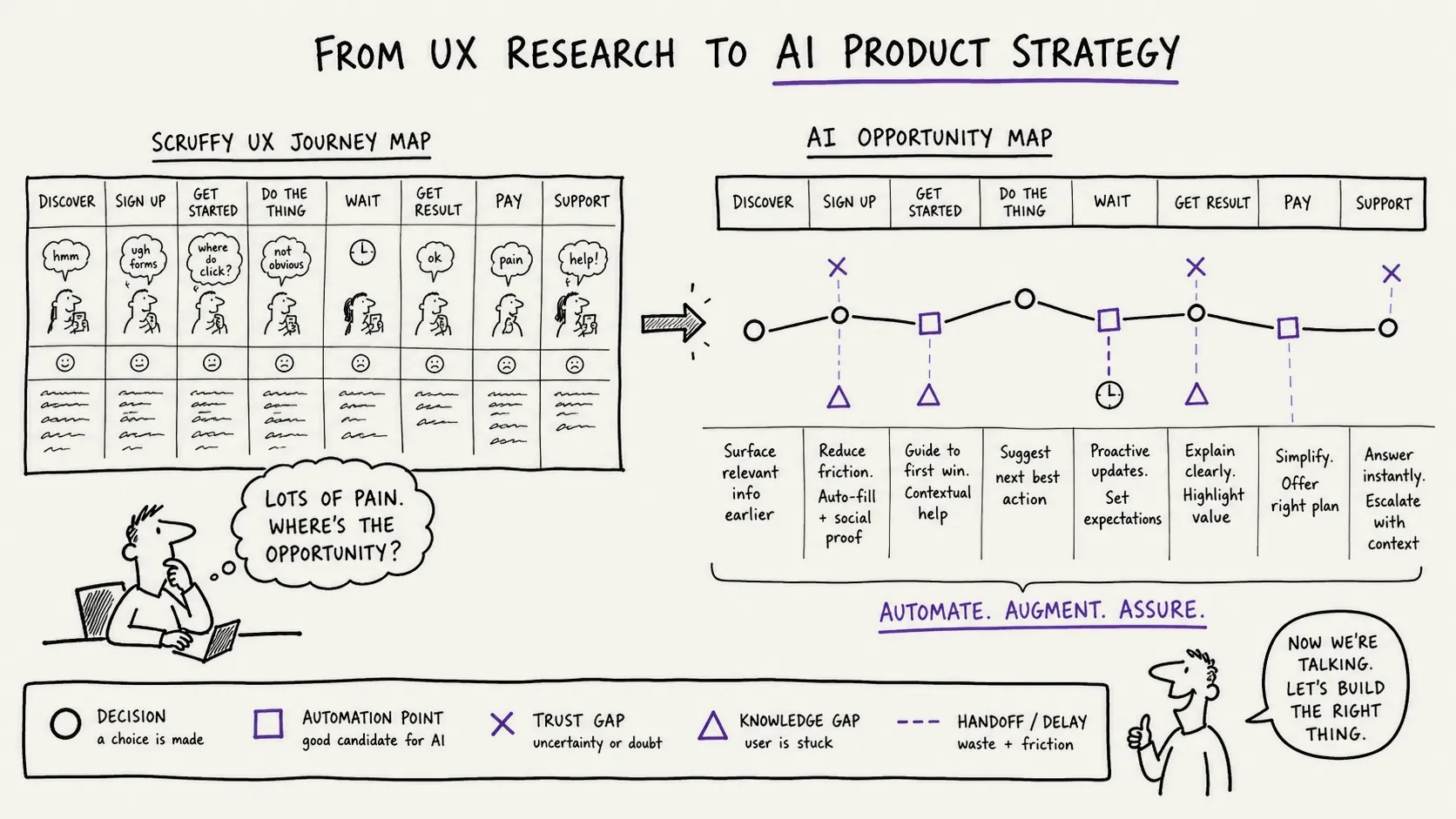
A useful method is to take an existing research artefact and ask new AI strategy questions.
- Journey map: where is work slow, repeated or emotionally costly?
- Service blueprint: where are handoffs, ownership gaps or policy constraints?
- Task analysis: what decisions, checks or classifications happen repeatedly?
- Research notes: what language, fears, expectations or trust barriers appear?
- Support logs: what problems repeat, escalate or require expert judgement?
- Analytics: where does behaviour suggest confusion, delay or abandonment?
Then convert the findings into opportunity hypotheses: AI could assist here, validate there, prepare this, route that, summarise this evidence, or capture this correction.
The point is not to force AI into every pain point. The point is to turn research into better strategic options.
Turn Research Into AI Opportunity
- 01Take one journey map, workflow map or service blueprint
- 02Mark: repeated decisions, knowledge gaps, slow handoffs, error-prone steps, trust-sensitive moments
- 03Write one AI opportunity hypothesis and one risk for each mark
- 04Score by business value, user value, data readiness and trust
- 05Choose one narrow prototype or research activity to run next