Key takeaways in 3 minutes
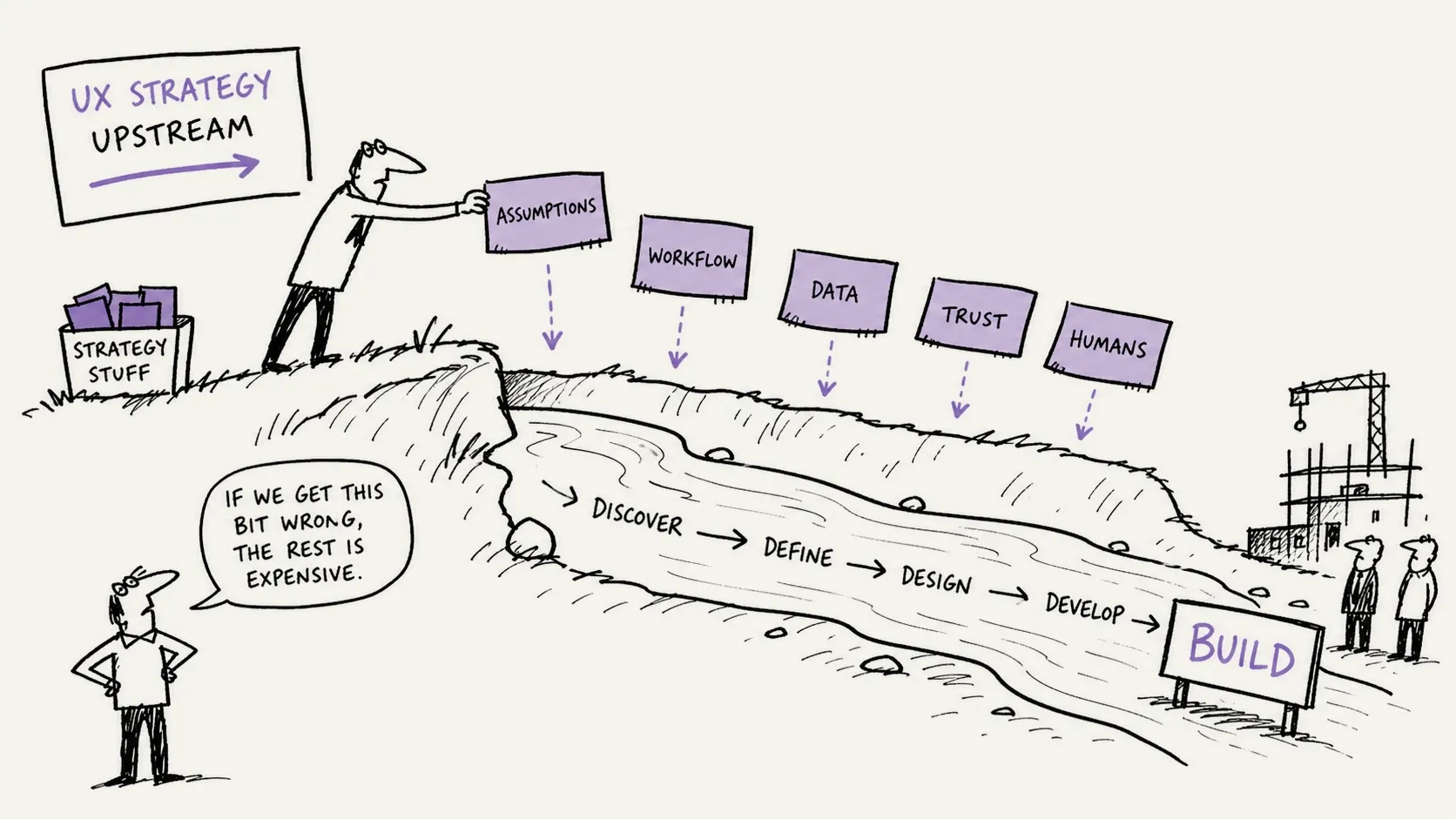
AI has moved UX strategy upstream.
The opportunity is to make design more useful where the business is actually deciding.
For years, UX fought to get invited earlier. AI may have finally kicked the door open, but it also changed what we are expected to bring into the room.
AI may have kicked the door open, but it also changed what UX is expected to bring into the room.
It is no longer enough to arrive early and ask what the screen should do. The better question is what system should exist, what work it should change, what it should automate, what humans should still decide, and what risk the organisation is willing to carry.
We wanted a seat at the table. Fine. But now the table has model risk, operational change, data quality, commercial pressure, and three people asking whether the roadmap still makes sense.
That is the new shape of UX strategy.
AI Changes Product Strategy
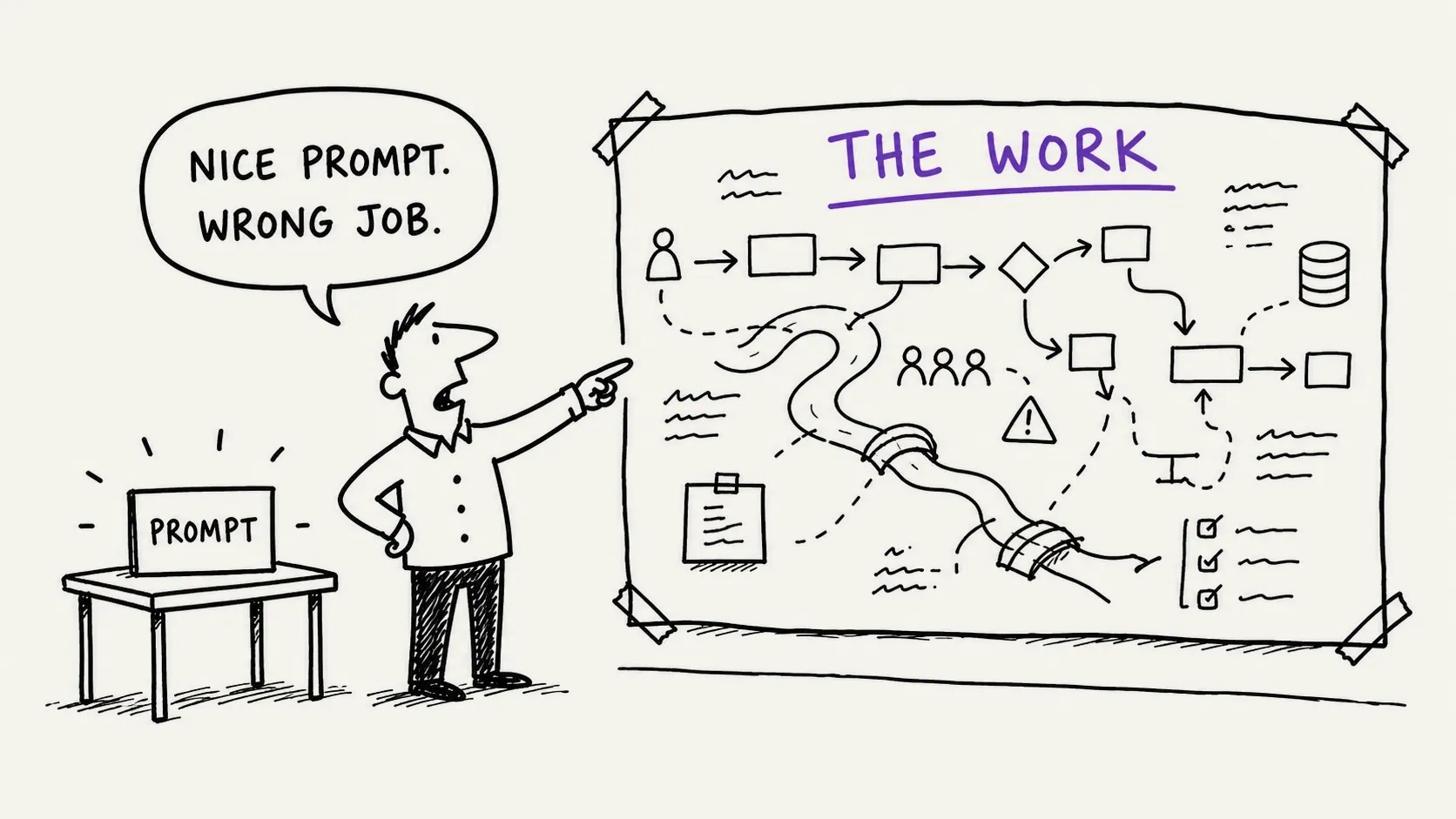
AI is not just another interface pattern. It changes what can be automated, what can be generated, what can be personalised, what can be copied, and what users may expect a product to do.
That means design questions become business questions faster.
Should this workflow exist in its current form? Should the user complete the task, or review a prepared result? What decision should the system support? What data is needed? What happens when AI is wrong? What proof would make the recommendation trustworthy?
These are upstream questions. If UX only enters after the solution has been chosen, the most valuable design work may already have been missed.
What Moves Upstream
Several design activities now belong earlier in the process.
Prototyping moves upstream because AI makes it faster to test behaviour, not just layout. A team can simulate a workflow, generate data, test a proposition or explore a service model before committing to delivery.
Research moves upstream because AI opportunities need evidence about work, decisions and trust. Without that, teams build features that look clever and land awkwardly.
Design systems move upstream because generated interfaces need rules, not just components. AI can produce variation quickly; governance needs to explain what good usage means.
Decision design moves upstream because many AI products are really decision-support systems wearing product clothes.
That is where UX can become more commercially useful.
Many AI products are decision-support systems wearing product clothes.
The New UX Strategy Artefacts
If the work changes, the artefacts should change too.
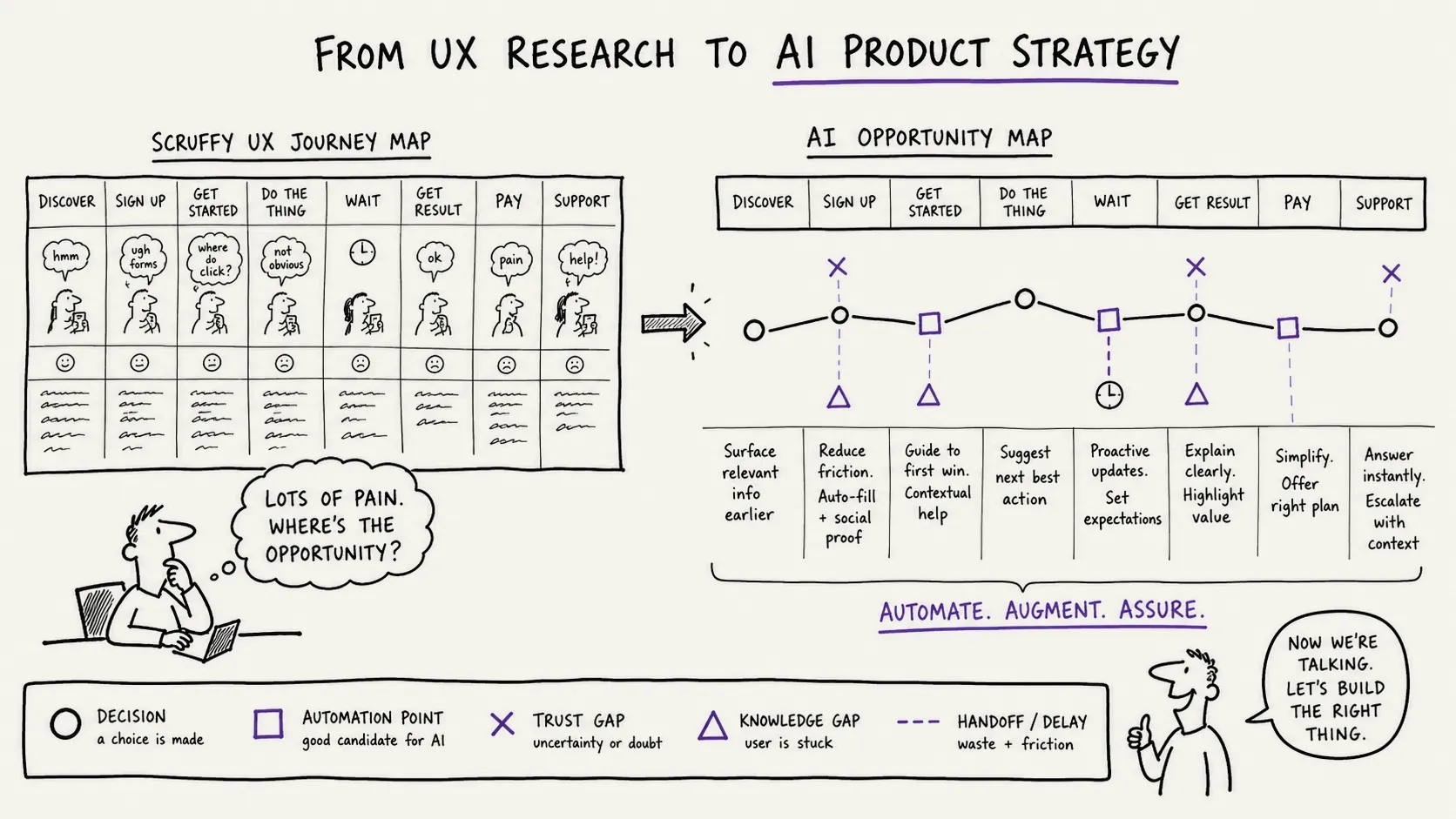
Alongside screens and journeys, UX teams should be producing opportunity maps, assumption teardowns, workflow reframes, trust models, AI critique notes, decision records, live prototypes and evidence plans.
These artefacts help leaders decide what to build, not just how it should look.
They also expose risk earlier. A beautiful interface can hide a weak strategy. A good upstream artefact makes the weak assumption visible before the team spends serious money turning it into software.
The opportunity is to make design more useful where the business is actually deciding.
What Designers Need To Bring
This requires new fluency.
Designers need systems thinking, model literacy, commercial judgement, evidence-led prototyping and enough technical curiosity to understand what AI changes behind the interface.
They do not need to pretend to be data scientists. They do need to understand how data quality, evaluation, human review, automation, integration and trust affect product success.
The role becomes less about defending design territory and more about improving strategic decisions.
That is a better conversation.
The UX Strategy Upstream Map
- 01List the traditional UX artefacts for one product area
- 02Add the strategic questions: what work could disappear?
- 03What decision could improve, and what data is needed?
- 04What should a human approve, and what trust risk appears?
- 05What evidence could be produced quickly before build?