Key takeaways in 3 minutes
Prompting matters, but it is not the main strategic advantage.
Prompt engineering is useful. Workflow understanding is valuable.
The most important AI skill may not be writing better prompts. It may be understanding the work well enough to know what should be automated in the first place.
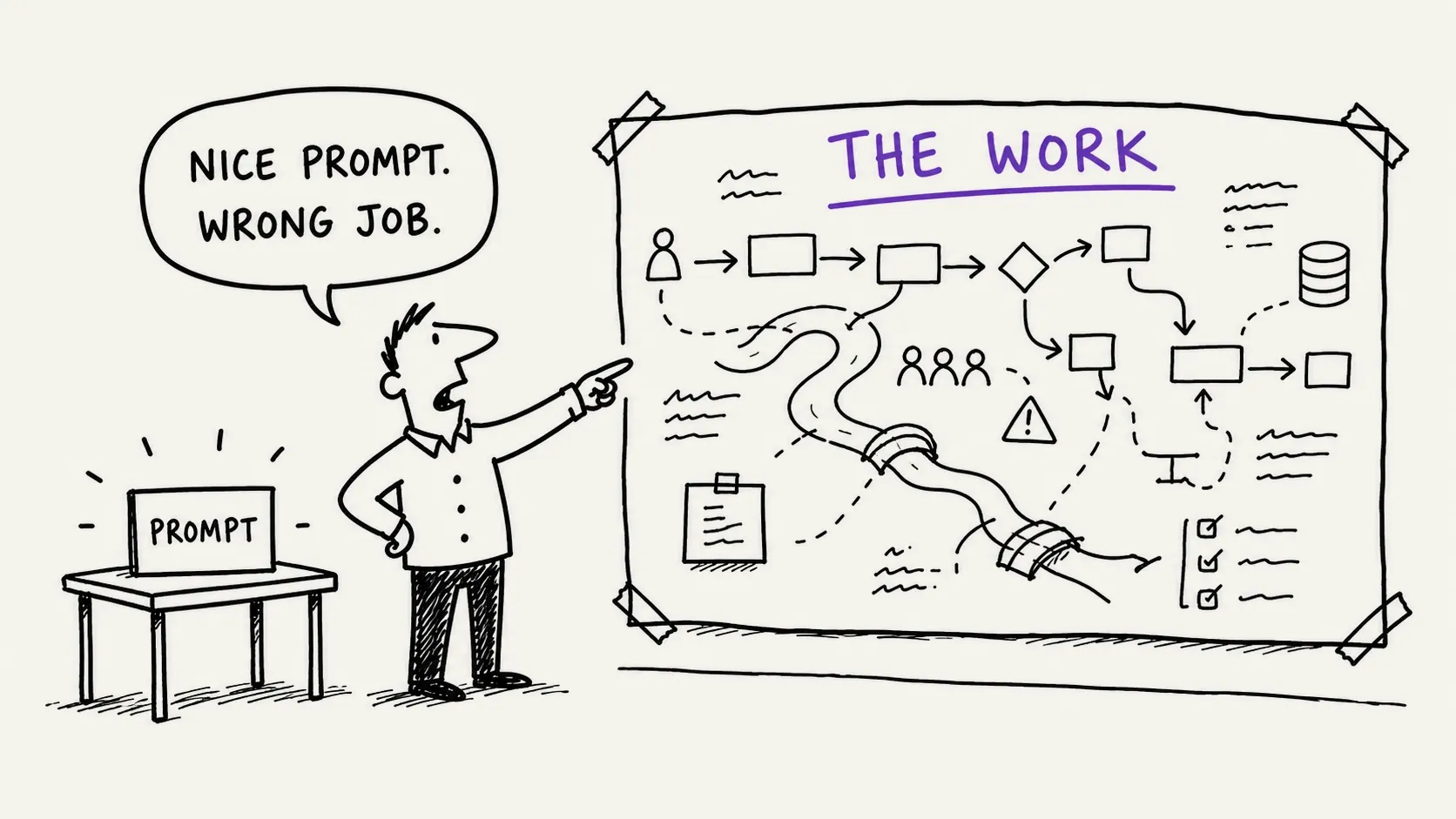
A perfect prompt for the wrong job is still the wrong job.
Prompt skill is useful. A good prompt can improve outputs, reduce ambiguity and make a model more helpful. Nobody sensible should pretend otherwise.
But a perfect prompt for the wrong job is still the wrong job.
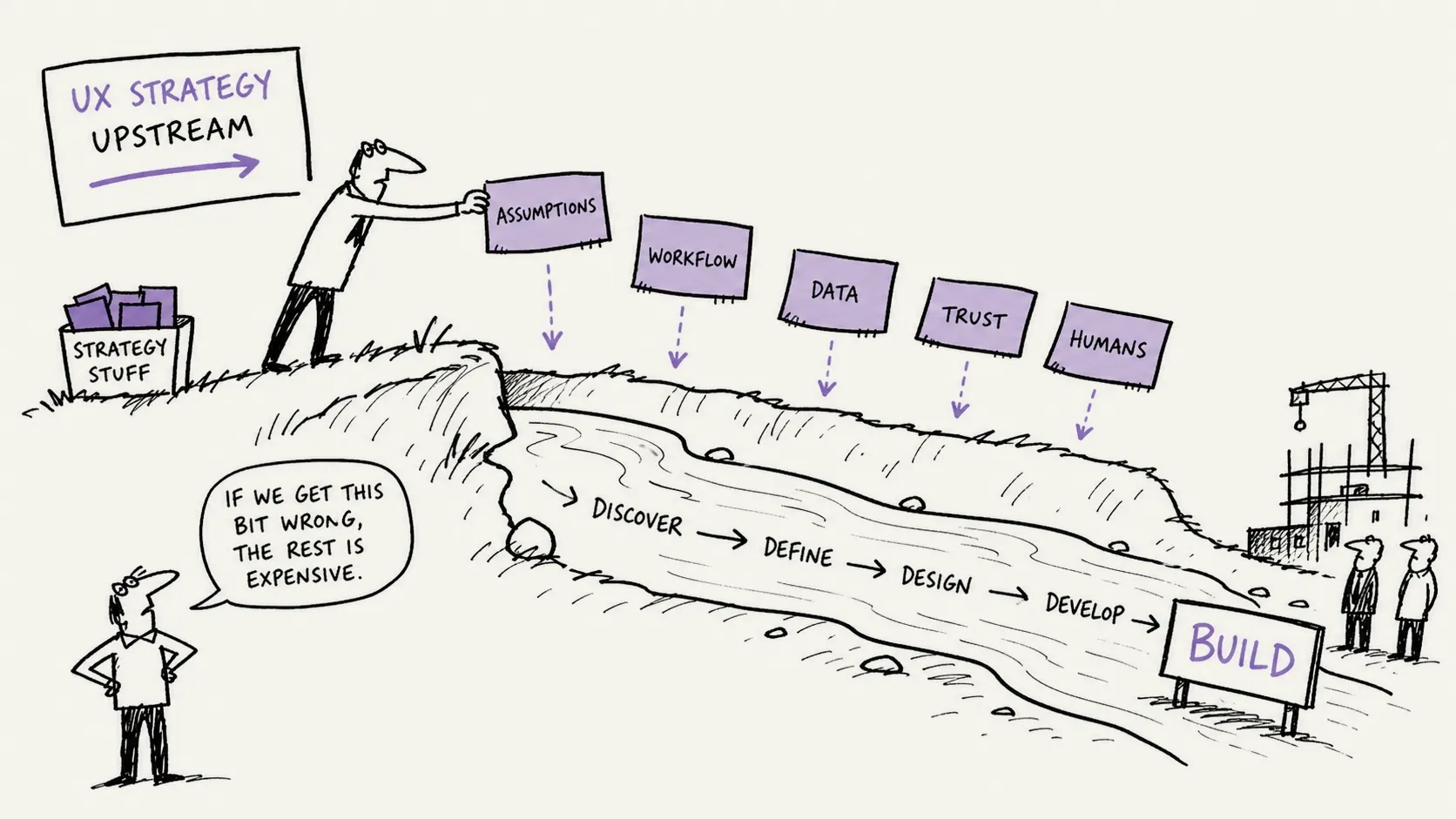
As AI tools become easier to use, prompt syntax becomes less defensible. The harder and more valuable skill is knowing where AI belongs in a workflow, what decision it should support, what evidence users need, where trust breaks, and what humans must still control.
That is why UX designers may be better positioned than they realise.
Prompts Are A Layer, Not The Whole Product
Prompt engineering became visible because it made AI feel usable. People who could coax better outputs from models had an obvious advantage when the tools were new and strange.
That advantage still exists, but it is not enough.
AI adoption fails when products ignore context. A model can produce a technically correct answer that nobody trusts, a useful summary that arrives too late, or a recommendation that cannot be acted on because the workflow around it is broken.
The prompt might be good. The product can still be wrong.
UX Already Studies The Hard Bits
UX research and service design are built around messy human systems.
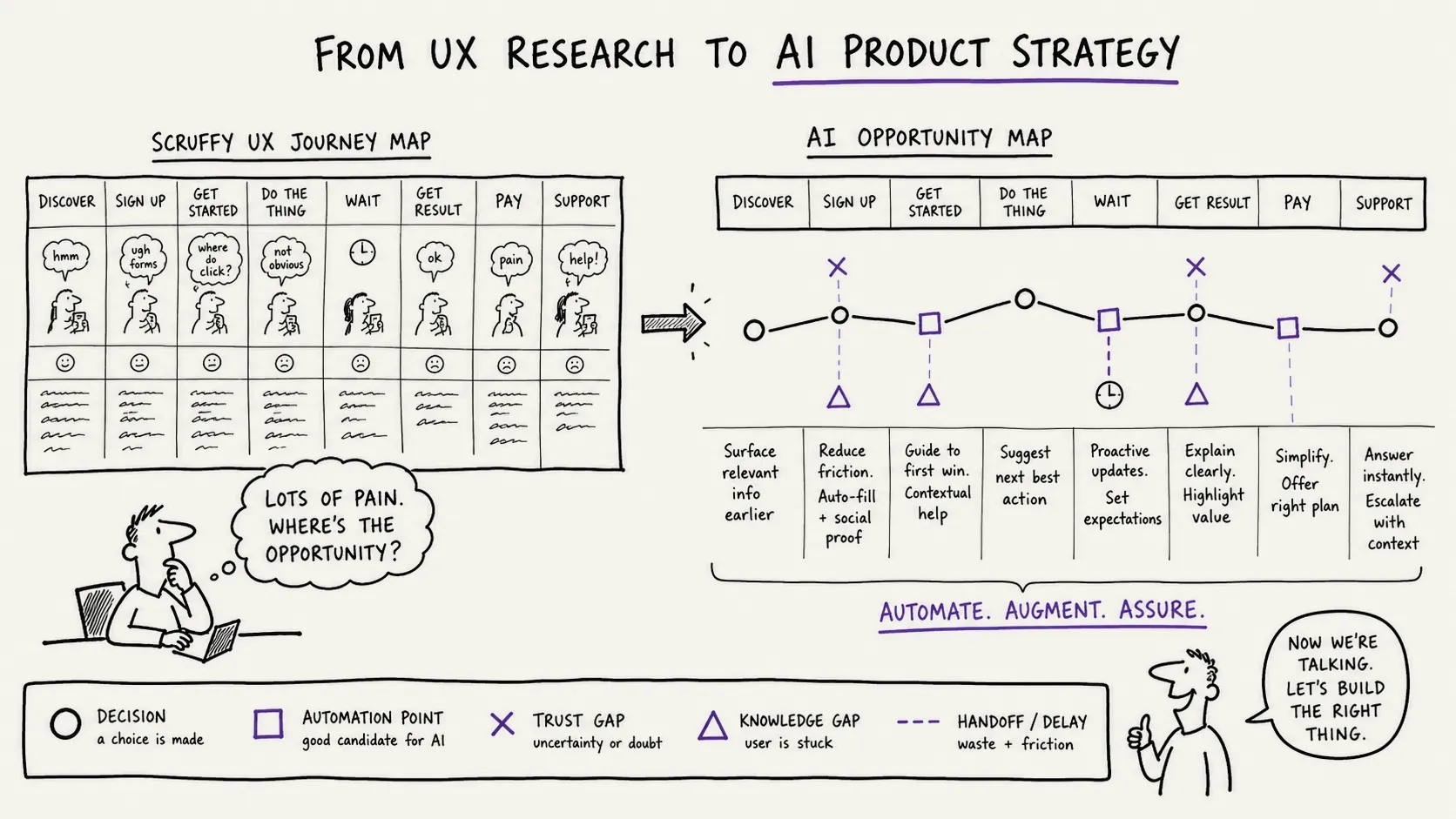
Designers ask what people are trying to do, what gets in the way, what language they understand, what evidence they need, what happens before and after a screen, and why a process that looks simple in a diagram becomes awkward in real life.
Those questions map directly onto AI product strategy.
Where does work happen? Who decides? What can go wrong? What should be automated, assisted, validated or left alone? What does the human need to inspect? How does trust form? What does the system need to learn from correction?
These are not prompt questions. They are product architecture questions.
These are not prompt questions. They are product architecture questions.
The New UX Advantage
The opportunity is not for designers to protect old work. It is for designers to expand into more valuable work.
AI product teams need people who can connect research, workflow design, prototyping, trust design, data readiness and business value. They need people who can move from "what should this screen look like?" to "what decision should this system improve?"
That is a natural extension of senior UX practice.
Designers who can build or direct AI prototypes, map workflows, identify trust risks and frame commercial value become strategic operators. Designers who stay only in interface polish may be brought in too late, after the important decisions have already hardened.
That is the uncomfortable bit. UX has an opportunity, but it also has homework.
Prompt engineering is useful. Workflow understanding is valuable.
What Designers Need To Add
UX instincts are useful, but not sufficient on their own.
Designers need better model literacy: enough to understand what AI can and cannot reliably do. They need sharper business framing: enough to connect work to cost, risk, revenue, throughput or adoption. They need comfort with data, evaluation, automation, human-in-the-loop systems and operational constraints.
They do not need to become machine-learning engineers. They do need to become more commercially and technically fluent.
The prize is worth it. Companies do not just need people who can talk to models. They need people who can understand work, redesign decisions and make AI trustworthy enough to use.
The UX-Led AI Discovery Exercise
- 01Map the workflow: goals, roles, decisions, pain points, edge cases
- 02Add: trust requirements and systems involved
- 03Identify where AI could assist, draft, classify, validate, route, summarise or learn
- 04Define what the human must still control — and why
- 05Use findings to write better prompts and better product decisions