Key takeaways in 3 minutes
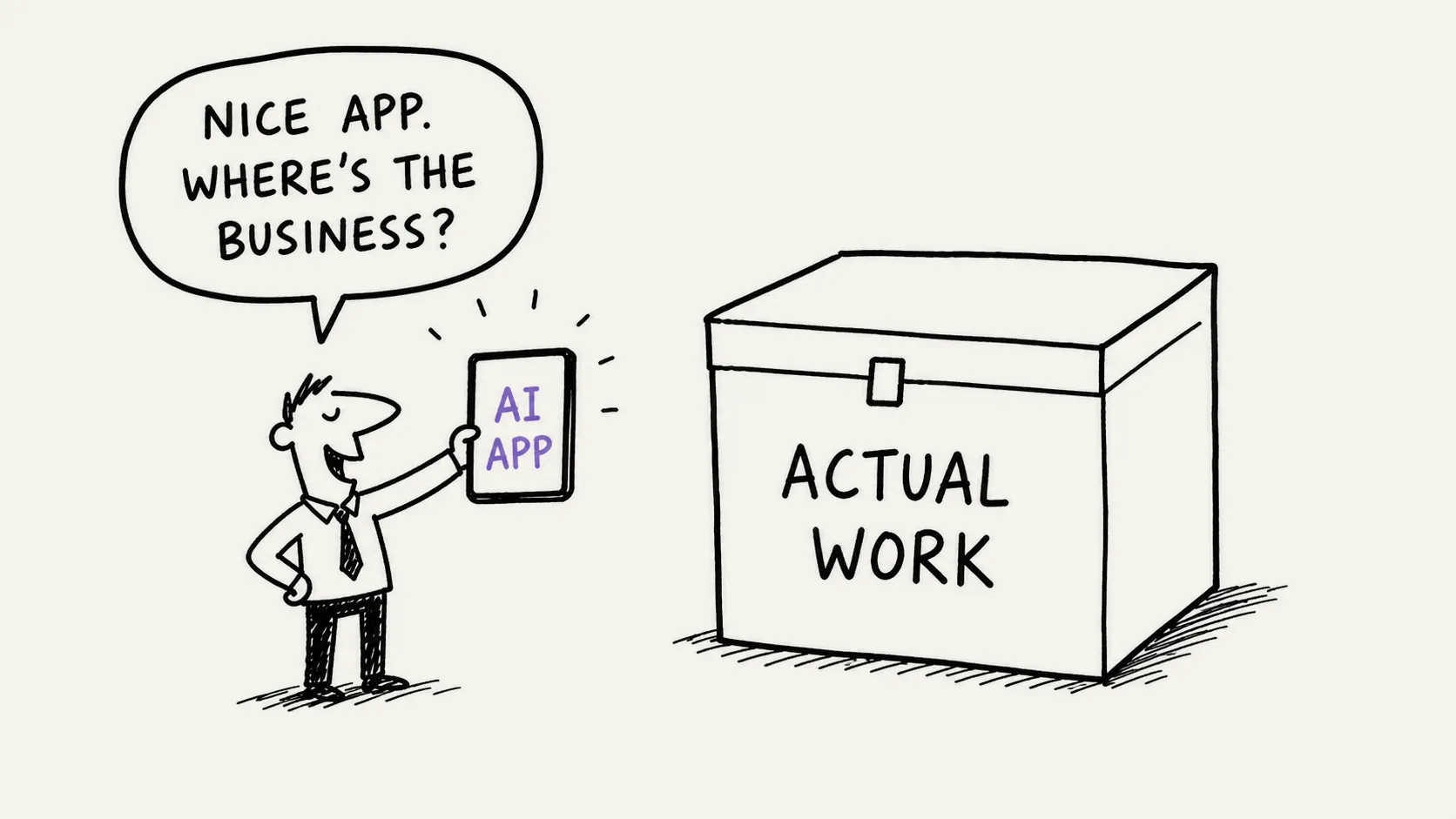
Your customer does not buy your Figma files. They buy confidence that the product will solve a real problem and survive contact with reality.
The artefact only matters if it helps the team make a better decision.
Your customer does not buy your Figma files. Your board does not buy your component library. They buy confidence that the product will solve a problem, create value, and survive contact with reality.
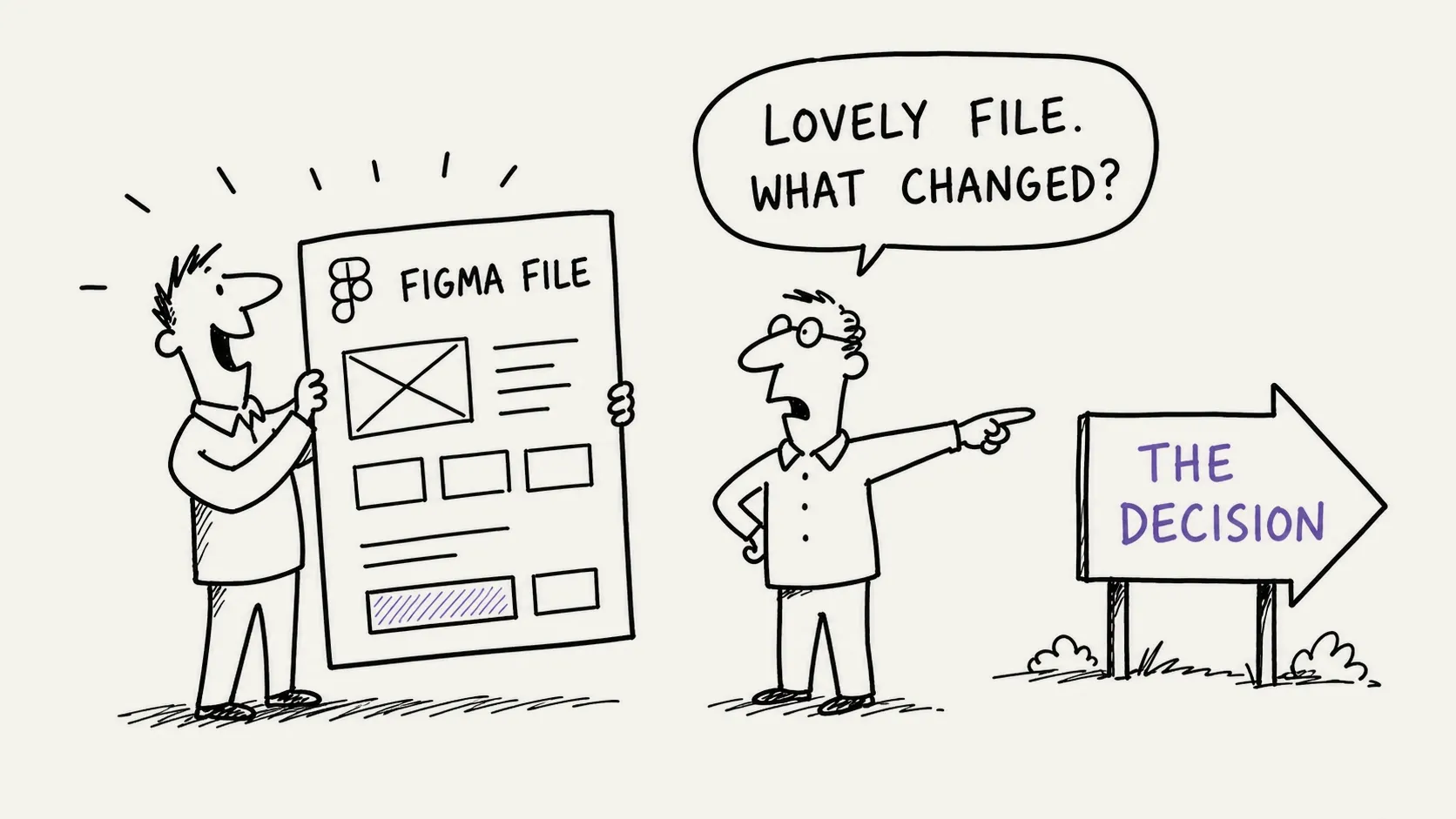
The file is an artefact. The value is the decision it helps improve.
That does not make Figma unimportant. It is still a brilliant tool for design craft, collaboration, exploration, interface definition and getting people to point at the same rectangle without needing a two-hour alignment ritual.
But a beautiful Figma file can still hide a terrible idea with the confidence of a consultant wearing expensive trainers.
The file is an artefact. The value is the decision it helps improve.
What Figma Is Still Good For
Static design artefacts are useful. They help teams see structure, content, hierarchy, flow and visual intent. They make abstract ideas discussable. They help designers compare options and help engineers understand what needs to be built.
For many interface questions, that is exactly what is needed.
The problem starts when the design file becomes the proof of value. A polished screen can make uncertainty look smaller than it is. It can show what something might look like without showing whether the workflow works, whether the data behaves, whether users trust the output, or whether the business decision makes sense.
That distinction matters more now.
AI Moves Us From Representation To Simulation
AI-assisted development makes it faster to create working prototypes, digital twins and behavioural models. That changes the standard of evidence available to product teams.
If the decision depends on behaviour, data, roles, edge cases, workflow consequences or business logic, a static artefact may not be enough.
A working model can show how the thing behaves. It can use realistic data. It can include different roles. It can expose error states. It can reveal where the workflow breaks, where trust is missing, or where the idea is not as useful as everyone hoped over biscuits.
That does not mean every idea needs a full build. It means the team should choose the artefact that matches the decision.
AI moves us from representation to simulation.
The Digital Twin Conversation
A digital twin of an app or workflow does something different from a design mockup. It lets leaders interrogate behaviour.
What happens when the data is incomplete? What does the manager see? What does the customer see? What happens when AI is uncertain? What is the approval point? What metric would improve if this worked? What does the system need to know before recommending an action?
Those are strategic product questions.
This is where designers who can create or direct working models become more valuable. They are not just producing artefacts for delivery. They are producing decision-quality evidence.
That is a stronger position in AI-era product work.
The artefact only matters if it helps the team make a better decision.
When To Use Which Artefact
Use a static design when the question is about visual direction, hierarchy, content structure or interface alignment.
Use a clickable prototype when the question is about navigation, comprehension or task flow.
Use a live prototype when the question is about behaviour, data, roles, system logic, AI output, trust, exceptions or business consequence.
Use a full proof of concept when the question involves technical feasibility, integration, performance, security or operational readiness.
The point is not to worship prototypes. The point is to stop using the wrong artefact for the decision.
Match the Artefact to the Decision
- 01Identify the decision the team needs to make
- 02Static design: for visual alignment and interface definition
- 03Clickable prototype: for flow and navigation validation
- 04Live prototype: for behaviour, data and edge case discovery
- 05Proof of concept: for technical feasibility and business confidence