Key takeaways in 3 minutes
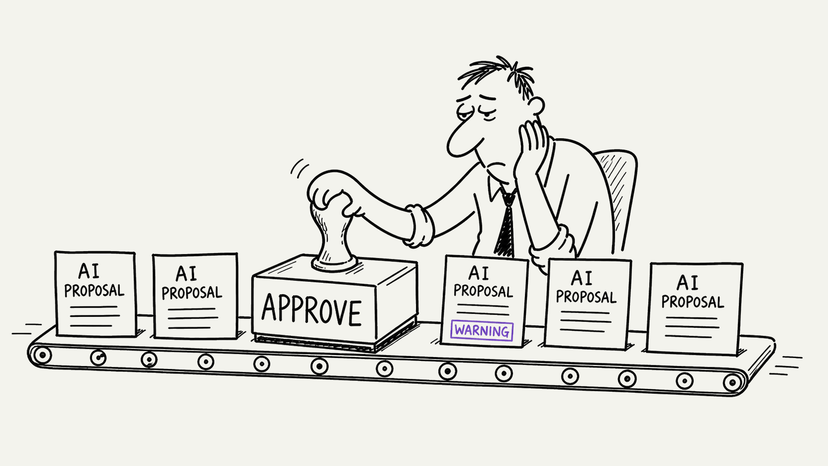
Human approval is an important control, but it is not an accountability system.
An AI workflow can include a person and still fail if the evidence is weak, the reviewer lacks authority, the interface discourages intervention, the record captures only a click, the outcome cannot be recovered or nobody monitors what happens across many decisions.
A human approval gate can still sit inside an unaccountable system.
Accountability is not a single moment. It is a chain of capabilities around a consequential decision.
Product teams should map all six links around one consequential workflow and find the weakest. That is more useful than adding another Approve button and hoping responsibility has been dealt with.
Human approval is rapidly becoming the comfort blanket of enterprise AI.
The system can recommend, draft, classify, reroute, refund, publish or pay—as long as a person clicks the final button.
That sounds responsible. Sometimes it is.
But an approval gate can work exactly as designed while the surrounding system remains completely unaccountable.
The reviewer may have seen poor evidence. They may not have had the authority to decide. The record may only say approved. The action may be irreversible. Nobody may notice that similar exceptions have doubled over the last month.
The gate did its job.
The system still failed.
A human approval gate can still sit inside an unaccountable system.
We Have Made The Gate Carry Too Much
Approval is attractive because it gives accountability a visible home.
There is a screen. There is a named person. There is a button. There is usually a timestamp, which makes everyone feel better because timestamps look wonderfully official.
The trouble is that accountability is not a single moment. It is a chain of capabilities around a consequential decision.
That chain begins before the reviewer arrives and continues after the action has left the interface.
`text
Evidence → Authority → Intervention → Record → Recovery → Monitoring
`
If any important link is missing, the presence of an approval button does not repair it.
What Could The Person Actually Know?
An AI recommendation arrives with a confidence score of 94%.
Impressive.
But confidence in what?
Perhaps the purchase order and invoice match. Perhaps the goods have arrived. Perhaps the system is extremely confident that all the tidy fields agree.
It may still have no idea whether the supplier genuinely changed its bank details two days before an £84,000 payment.
Confidence describes the model output. It does not repair missing evidence.
An accountable workflow must help the reviewer inspect what supports the proposal, where that evidence came from, what is inferred and what remains unknown.
The system transfers responsibility to a human without transferring enough evidence, power or time to exercise it properly.
Without that, the human is not reviewing the decision. They are reviewing the system's confidence in its own homework.
Who Has The Right To Decide?
Putting a decision in front of a person does not automatically give them legitimate authority.
An account director may be allowed to approve a £5,000 credit but not a £6,400 exception. A data steward may merge two reversible customer records but not delete a legal entity. A marketing manager may approve a campaign but not make an unreviewed twelve-month pricing commitment.
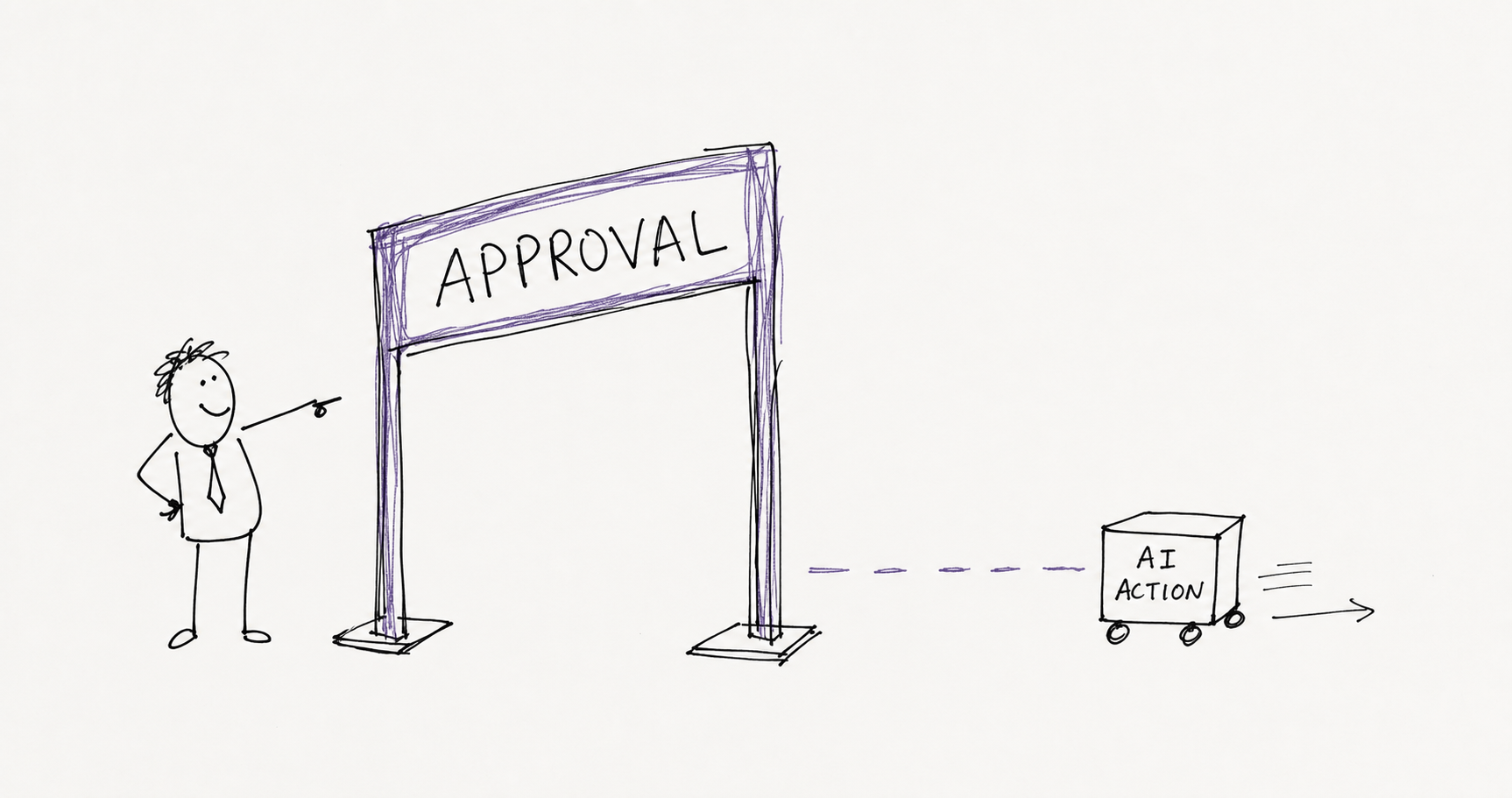
Authority needs to be represented in the workflow and enforced at the point of action.
Otherwise the product is not creating accountability. It is routing a difficult decision to someone with a login.
Can The Human Meaningfully Intervene?
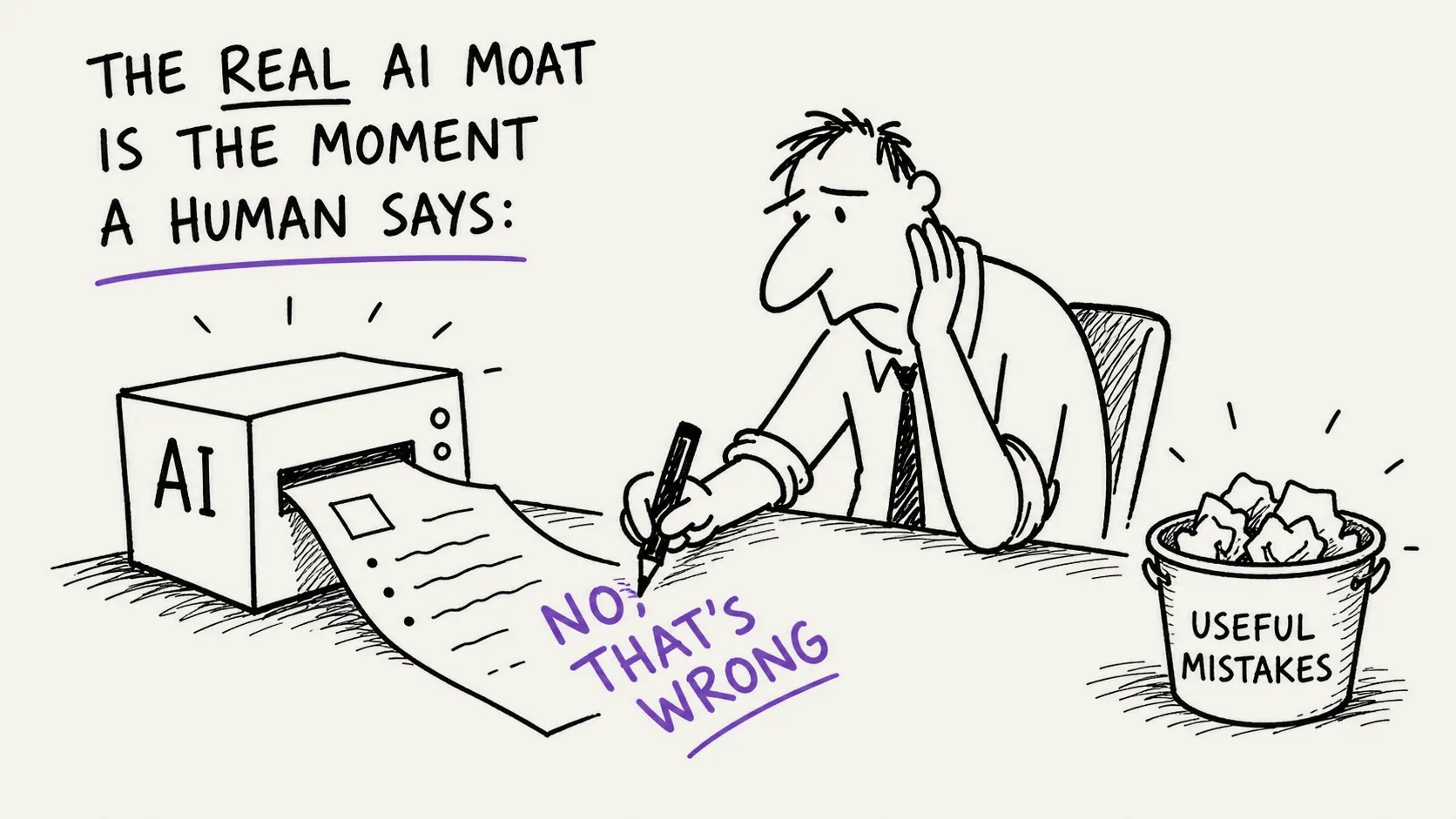
Approve and reject are not the full vocabulary of human judgement.
A responsible reviewer may need to edit the proposed action, reduce its scope, hold it pending evidence, request a second opinion, escalate it to someone with greater authority or choose a safer alternative.
If the interface presents one polished recommendation and treats every other path as an exception, the machine has already done more than propose. It has framed the decision around its preferred answer.
Meaningful oversight requires meaningful options.
The aim is not to add friction to everything. It is to match the form of intervention to the consequence, uncertainty and reversibility of the action.
What Survives After The Click?
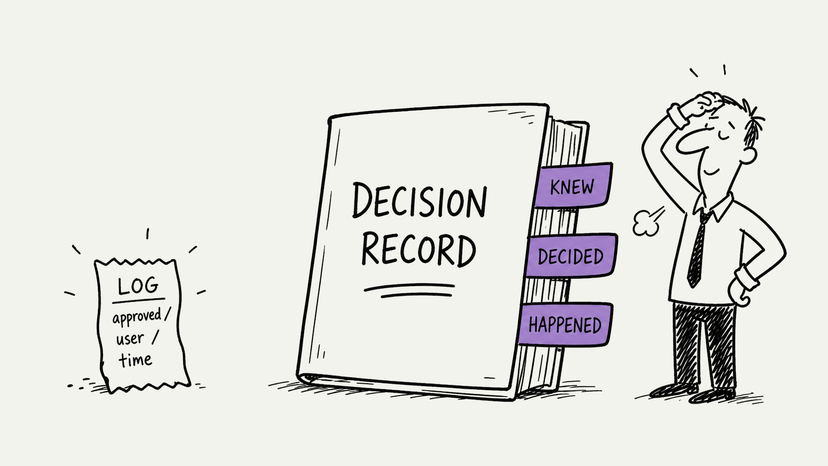
Most systems can produce a log.
Tony approved proposal 1847 at 14:32.
Splendid. We know a button was pressed.
We do not necessarily know what Tony saw, which evidence was available, what was missing, whether the proposal changed, what authority applied or what happened next.
A useful decision record preserves the decision as it was understood at the time. It connects the proposal, evidence snapshot, authority, human intervention and operational result.
A log says something happened. A decision record helps us understand why.
That distinction matters when the organisation needs to investigate an outcome, improve a workflow, respond to a challenge or learn whether its controls are doing useful work.
What Happens When The Decision Is Wrong?
Accountability without recovery is mostly documentation.
Some AI actions can be undone easily. A draft can be edited. A temporary hold can be released. A reversible data merge can be restored from a snapshot.
Other actions escape quickly. Money moves. Customers receive messages. Public promises are screenshotted. A person is denied something important.
The product needs to make the recovery window visible before the decision and preserve a route to contest, reverse or remediate the outcome afterwards.
The question is not only "Was someone accountable?"
It is also "Can anyone still do anything useful?"
Who Is Watching The System, Not Just The Decision?
Individual approval screens cannot reveal how the operation is changing over time.
Patterns emerge across decisions that no single reviewer can see. Approval rates creep upwards. Overrides cluster around one team. An evidence source begins to fail. Escalation becomes rarer. A supposedly exceptional action becomes routine.
This is the operational oversight link.
The purpose is not to watch every action. That would simply move the scaling problem from the machine to a tired group of humans.
The purpose of oversight is to notice what matters while intervention still matters.
That requires product teams to design for sampling, exceptions, drift, recurring interventions and changes in consequence—not merely a dashboard showing how many AI actions happened this week.
The Weakest Link Wins
An accountable AI workflow therefore looks less like a gate and more like a chain:
If any link breaks, the system can create the appearance of accountability without the capability.
- Strong approval with weak evidence produces informed-looking guesses.
- Strong records with weak authority preserve the wrong person's decision beautifully.
- Strong monitoring with no recovery creates excellent visibility of harm nobody can stop.
- Strong governance language with weak interaction design leaves responsibility trapped in a PDF.
This is why accountability needs product, design, engineering, risk and operational leadership in the same conversation. No single screen and no single team owns the entire chain.
What This Changes For Product Teams
When evaluating an AI workflow, do not begin with: "Where should we put the approval?"
Begin with the consequence.
What can this system change in the world? Who or what could be affected? How reversible is the outcome? What would a responsible person need to know before allowing it? What should remain inspectable afterwards?
Then work in both directions.
Work backwards into evidence, provenance and authority. Work forwards into record, recovery and oversight.
The approval gate will still matter. It will simply stop carrying the entire moral weight of the system on one rather optimistic button.
The Practical Move
Map The Six Links Around One Workflow
- 01**Evidence:** Can the reviewer inspect what supports the proposal and what is missing?
- 02**Authority:** Is the right to decide explicit and enforced by the product?
- 03**Intervention:** Can the person edit, hold, reject and escalate—not just approve?
- 04**Record:** Can the decision be reconstructed after the interface disappears?
- 05**Recovery:** Can the outcome be stopped, reversed or contested?
- 06**Monitoring:** Will the organisation notice when behaviour changes across many decisions?
I built Accountability Lab to make these questions interactive. The point is not to present a finished governance product. It is to give teams something concrete enough to inspect, disagree with and improve.
Because accountability should not be the sentence added to the end of an AI strategy.
Accountability should be visible in how the system behaves.
It should be visible in how the system behaves.