Key takeaways in 3 minutes
Human-in-the-loop AI does not automatically create meaningful oversight.
If every proposal looks the same, Approve is visually dominant, confidence is treated like a recommendation and records only capture button clicks, the human may become a rubber stamp.
A human being in the loop is not the same as a human being making a decision.
Genuine oversight has to be designed into the interface. Routine and consequential decisions should look different. Approve, Override and Dismiss should be equal. High-stakes approvals should require context engagement.
The difference between "a human approved it" and "a human decided it" is about to matter.
Read alongside: The Context Problem and What A Real Decision Record Looks Like. The full product architecture is written up in the AI Agent Accountability Framework case study.
"Don't worry, there's a human in the loop."
That sentence is now doing a lot of work in enterprise AI.
It is meant to reassure everyone. The machine proposes, the human reviews, the organisation stays safe. Nobody is letting an AI agent run wild through procurement, supply chain or finance with a company credit card and a suspicious amount of confidence.
Lovely.
The problem is that a human being in the loop is not the same as a human being making a decision.
A human being in the loop is not the same as a human being making a decision.
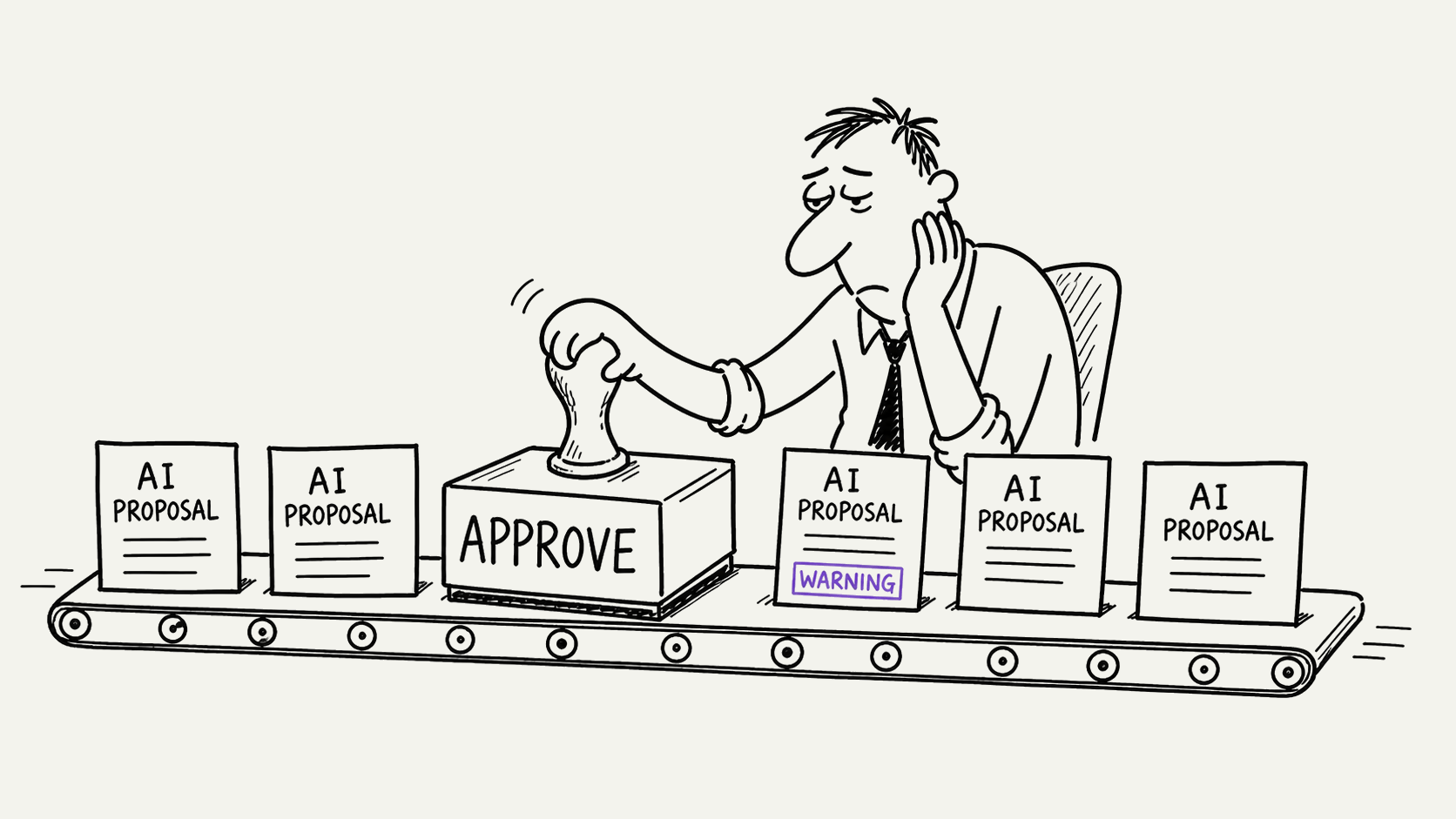
There may be a person. There may be a button. There may even be a log entry. But if the interface quietly turns oversight into queue-clearing, what you have is not governance. It is approval theatre.
The Rubber-Stamp Problem
Picture Rachel, a supply chain operations manager.
Her company has deployed AI agents to help with supplier risk, routing, replenishment and contract adjustments. Every proposal needs human approval before the system acts.
On paper, this sounds sensible.
In practice, Rachel gets forty proposals a day. Most arrive through the same interface. Same card. Same confidence score. Same summary. Same big Approve button. Dismiss and Override exist, but they feel like exceptions.
By Tuesday afternoon, Rachel has approved thirty-seven of them.
The uncomfortable question is not whether Rachel clicked Approve. She did.
The question is how many of those approvals were decisions.
If the interface quietly turns oversight into queue-clearing, what you have is approval theatre.
Throughput Is Not Oversight
Most approval interfaces are designed for speed because speed is easy to measure.
You can measure how quickly Rachel clears her queue. You can measure approval rate. You can measure average time to action.
It is harder to measure whether she understood the thirty-seventh proposal she approved while half-thinking about the next meeting.
So the interface optimises for the thing that looks efficient: same treatment for every proposal, Approve as the dominant path, confidence score in the header, minimum friction.
Each individual choice seems reasonable.
Together, they create an environment where genuine oversight is subtly discouraged.
The interface is saying: keep going.
What Genuine Oversight Needs
Genuine oversight requires the interface to behave differently.
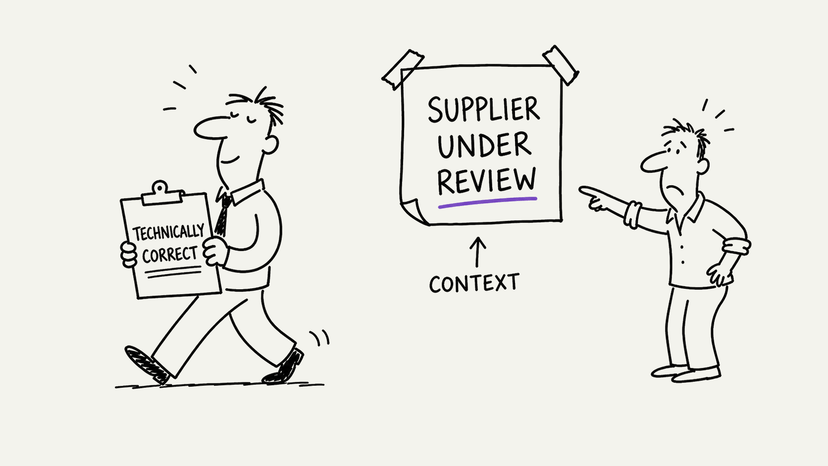
First, the system must signal decision weight before the user reads the detail. A routine reorder should not look like a supplier switch during a risk event. The classification should change the visual hierarchy, not sit quietly in a badge nobody notices.
Second, Approve, Override and Dismiss should be equal. Approve is not the desired outcome. A considered decision is the desired outcome.
Approve is not the desired outcome. A considered decision is the desired outcome.
Third, consequential proposals should require context engagement. If the decision matters, Approve should stay disabled until the context block has been opened.
Fourth, confidence score should not sit in the header like a permission slip from the machine. It belongs in the reasoning disclosure as context, not as a shortcut to judgement.
These are interface decisions. That is the point.
The Regulatory Bit Nobody Can Ignore
The EU AI Act's high-risk AI obligations start to matter in a very practical way from August 2026.
The phrase that matters here is meaningful human oversight.
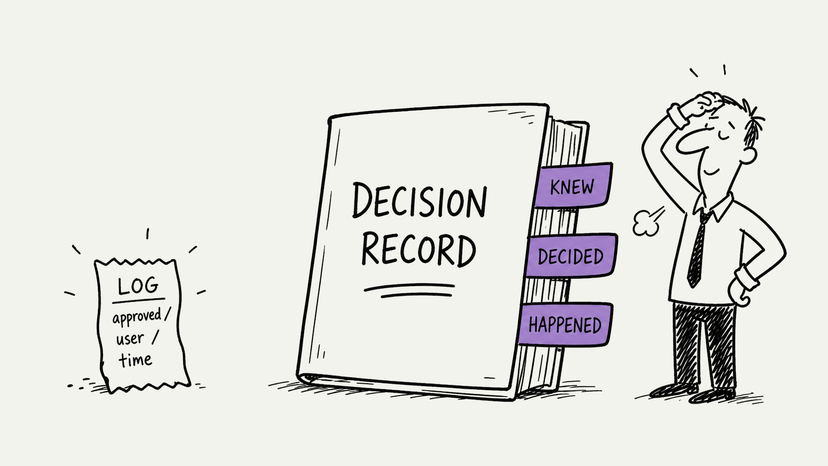
A log entry saying { event: "approved" } is evidence that someone clicked a button. It is not evidence that a qualified person understood the proposal, had access to the relevant context, could override it and made a defensible decision.
A log entry is evidence that someone clicked a button. It is not evidence of meaningful oversight.
That distinction will matter to regulators, auditors, customers and CFOs.
It should already matter to product teams.
The Practical Move
Audit Your Human-In-The-Loop Workflow
- 01Do routine and consequential decisions look different before the user reads them?
- 02Is Approve visually dominant?
- 03Are Override and Dismiss treated as legitimate outcomes?
- 04Is confidence shown as a decision proxy?
- 05Can the system prove the approver opened the context for high-stakes decisions?
- 06Does the record show what the human knew, or only that they clicked?
The accountability is not in the log.
It is in the brief, the interface and the decision the human was actually helped to make.
The accountability is not in the log. It is in the brief.